


Quick answer
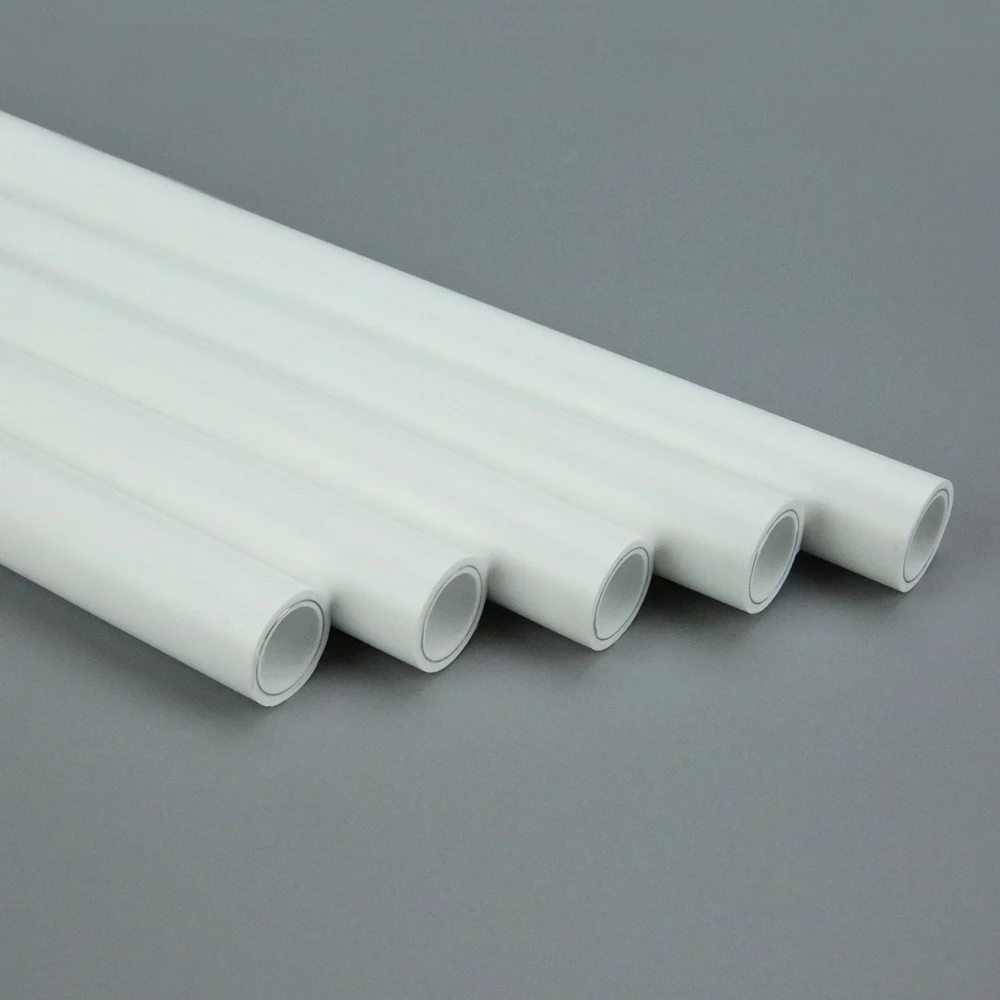
Aluminum composite PPR can suit hot water circulation when its pipe series matches the loop’s long-term temperature and pressure. Its lower thermal expansion can be useful on long circulation runs where limiting pipe movement matters. DESO offers PPR aluminum composite pipe in PN16 and PN20 for hot and cold water applications.

Is Aluminum-Plastic PPR Pipe Suitable for Hot Water Circulation Systems?
Circulation duty is the key consideration. Between periods of use, an ordinary hot-water branch may cool, but a recirculation loop keeps hot water moving. As a result, much of the return piping can stay pressurized and hot for extended periods.
That changes how you select a PPR pipe for hot water supply. In PPR pipe hot water circulation applications, the pipe has to suit the long-term conditions of the system rather than just tolerate hot-water use.
What Three Challenges Do Hot Water Circulation Systems Pose for Piping Materials?
Hot water circulation keeps the pipe exposed to heat and pressure for much longer periods than a line that cools between uses. However, you have to consider both the pressure and operating temperature together instead of just relying on the PN rating. That’s because a rise in temperature causes polypropylene’s allowable pressure to change.
You also have to keep the continuous flow in mind. The water velocity and pipe diameter have to suit a system where the water can circulate for prolonged periods.
Then it’s critical to consider thermal movement, especially across return lines and long corridors. The pipe expands along its length as it heats up, so the system needs enough room and support to accommodate that expansion.
So, can Tubo PPR be used for hot water circulation? Yes, but the pipe series, operating conditions, and layout all need to suit continuous circulation rather than occasional hot-water use.
How Does Aluminum Reinforcement Help on a Hot Water Circulation Loop?
Consider a long return line that stays warm throughout the day. Every metre contributes to the total change in pipe length as temperature rises.
That movement becomes more limited with a PPR pipe with aluminum. DESO’s PPR piping guidance for HVAC and heating gives a linear expansion coefficient of about 0.050 mm/m·K for PPR-AL-PPR, compared with approximately 0.150 mm/m·K for standard PP-R.
That lower expansion leaves less movement for the piping layout to accommodate on long exposed runs and risers. Where maintaining alignment is the main priority, it can be particularly useful.
Keep in mind that some movement will remain. So any fixed points, guides, and other types of required compensation should suit the pipe diameter and layout.
How Do Aluminum Composite PPR, Standard PPR, and PEX Behave in a Circulation Loop?
Standard PPR can serve as a PPR hot water pipe when properly specified. Its higher thermal expansion, however, leaves more movement to accommodate across long runs.
An aluminum composite pipe brings greater rigidity and lower expansion. This can make it useful for straight runs, risers, or visible pipework where tighter dimensional control is preferred.
PEX behaves differently because of its flexibility. It can be routed around obstacles more easily, while its expansion behavior, support needs, and joining methods require a different installation approach.
For aluminum composite PPR hot water circulation, reduced movement becomes most useful when the layout actually benefits from it.
What Should Installers Check Before Using Aluminum Composite PPR?
The requirements of the specific pipe construction are the starting point for proper installation. Based on the design of the aluminum composite pipe, additional end preparation may be needed before fusão de calor. Make sure to follow the installation procedure specified for the piping system rather than implementing the same procedure for every composite pipe.
Expansion planning and support are also critical. Although thermal movement is reduced with aluminum reinforcement, it’s not entirely eliminated. Run length, operating temperature, layout, and piping diameter all affect how the piping should be supported and allowed to move.
For hot water circulation, installers should also confirm that the selected pipe series suits the system’s long-term temperature and pressure. Our PPR aluminum composite pipe is available in PN16 and PN20, giving designers options for different operating requirements.
When Does Aluminum Composite PPR Make Sense for Hot Water Circulation?
It makes sense when sustained hot-water duty is combined with long runs where thermal movement or alignment is a concern.
If those issues are minor, standard PPR may already satisfy the project. PEX may suit installations where flexible routing matters. Start with the loop’s temperature, pressure, dimensions, and layout, then select the construction around those requirements.
Perguntas frequentes
1. Can you use aluminum-layered PPR pipes for hot water lines?
Yes, but make sure the chosen pipe series is capable of handling the pressure and water temperature of the hot-water line over its intended service life.
2. What is the maximum temperature for PPR aluminum composite pipe?
DESO’s PPR aluminum composite pipe has a listed temperature range reaching 95°C. However, 95°C is not intended as a continuous operating temperature. For long-term service, our HVAC guidance uses 70°C as a reference temperature.
3. Will the pipe bend or lose its shape in hot water?
PPR expands as its temperature rises. The aluminum layer reduces that movement compared with standard PPR, helping the pipe maintain its alignment as temperatures change.
4. Is regular PPR pipe good for hot water?
Yes. Regular PPR can handle hot water as long as the pipe series you choose is correct for the system’s pressure and operating temperature.
5. Which pipe is actually the best for hot water loops?
There isn’t one choice for every system. Aluminum composite PPR can be useful when expansion control matters. Meanwhile, less demanding layouts may only require standard PPR.
6. What is the difference between aluminum PPR and PEX pipes?
The main difference between these two pipe types is flexibility. Aluminum composite PPR is a rigid piping system, whereas PEX can bend around corners and obstacles more easily.


