


For high-rise buildings, pipe selection depends on pressure, temperature, and long-term stability. Standard PPR works for basic systems, aluminum composite pipes reduce thermal movement in tall shafts, and PP-R CT pipes offer higher pressure and temperature capacity in compact designs. This article explains how each option fits real building scenarios so you can choose with confidence.
High-rise plumbing is not about one “best” pipe. It is about matching material behavior to building height, water demand, and operating conditions.

Why Pipe Selection Matters in High-Rise Buildings
As buildings rise, internal systems face higher static pressure, frequent temperature changes, and long vertical runs. A poor material choice can lead to expansion stress, pressure loss, or early failure.

Engineers must consider three core factors:
temperature limits, pressure resistance, and long-term stability. These factors shape how pipes perform over decades, not just during installation.
Understanding Standard PPR Pipes in Tall Buildings

Standard PPR pipes are made from polypropylene random copolymer. They are widely used in residential plumbing and mid-rise buildings.
They handle hot and cold water well and resist corrosion. Installation is simple, using heat fusion joints.
Where Standard PPR Fits Best
In high-rise projects, standard PPR is usually limited to lower floors or secondary systems. As height increases, static pressure rises quickly.
For these zones, designers often select pn25 ppr pipe to increase pressure tolerance. Even then, expansion control becomes a concern in long vertical runs.
Aluminum Composite Pipes: Controlling Expansion in Vertical Shafts
Aluminum composite pipes combine PPR layers with an aluminum core. This metal layer limits thermal expansion while keeping plastic welding benefits.
This structure makes them stable in tall risers where temperature changes occur daily.
Practical Benefits in High-Rise Design
In vertical shafts, thermal movement can stress fittings and anchors. Aluminum composite pipes reduce this movement by more than half compared to plastic-only systems.
They are often used for domestic hot water risers, circulation loops, and long exposed runs.
The trade-off is a slightly higher installation requirement due to layer preparation before fusion.
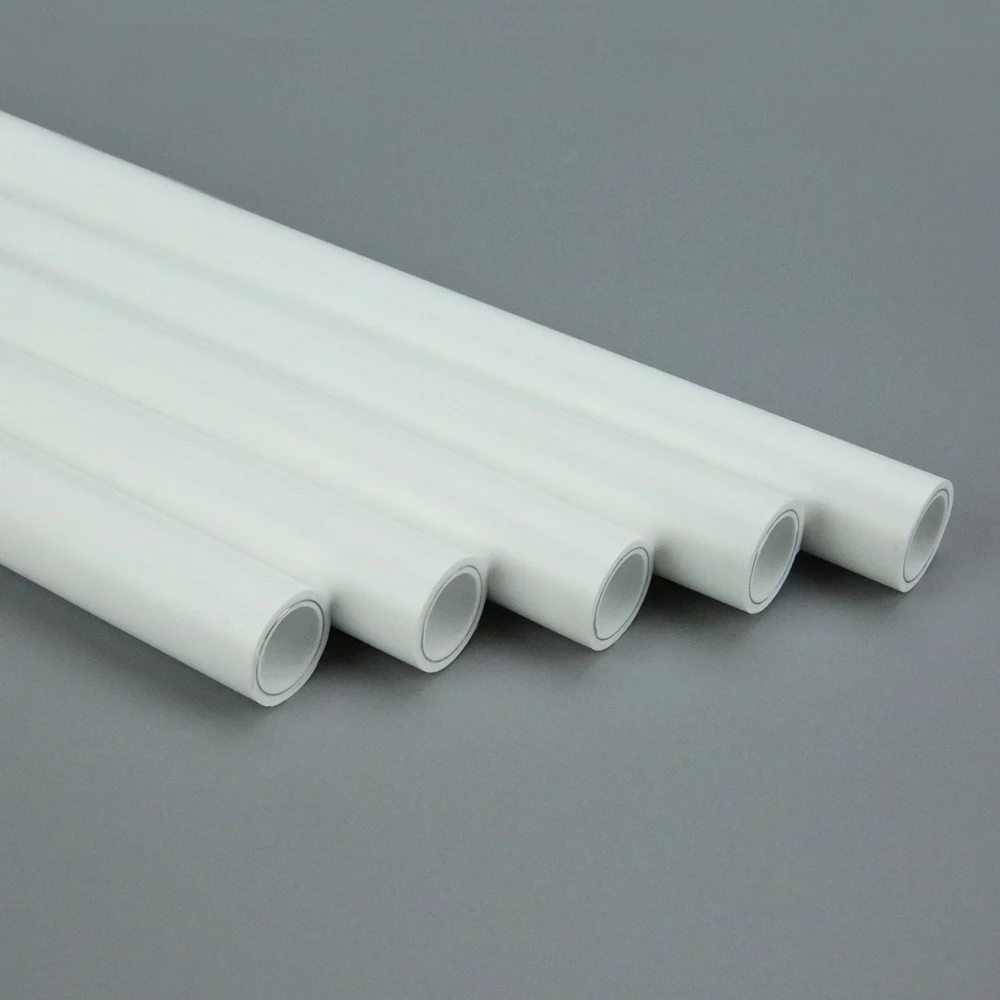
PP-R CT Pressure Piping: Engineered for Elevated Temperatures

This pipe uses pp rct material, a modified polypropylene with higher crystalline structure. The result is greater strength under heat and pressure without thicker walls.
This allows the pipe to carry more load while keeping the same outer diameter.
Key Technical Advantages
Compared with standard PPR, this system offers higher long-term pressure resistance at elevated temperatures. Tests show improved performance in hot water and HVAC systems.
It is often used as a ppr high temp pipe where compact pipe sizing is needed.
For high-rise projects, this means fewer pressure zones and more flexible layout options.

Comparing Performance Where It Matters Most

Temperature Behavior
Standard PPR handles typical hot water systems. Aluminum composite pipes control expansion well but rely on layered structure.
PP-R CT systems are designed for continuous higher temperature operation, especially where hot water demand is constant.
Pressure Handling

In tall buildings, pressure increases roughly 1 bar every 10 meters. A high pressure water pipe must sustain this load over decades.
PP-R CT pipes achieve higher pressure ratings without increasing wall thickness. This makes them suitable for risers and mechanical floors.
Long-Term Stability
All three systems resist corrosion. The main difference lies in deformation over time.
Aluminum composite pipes limit movement mechanically. PP-R CT materials resist creep at the molecular level.
Comparison Table: PPR vs. PPR-CT vs. Aluminum Composite Pipes
| Feature | Standard PPR | PP-R CT | Aluminum Composite PPR |
| Best Use | Basic plumbing, lower floors | High-pressure and hot water systems | Vertical risers and long runs |
| Pressure Handling | Moderate | High | High |
| Temperature Handling | Normal hot water | Higher and more stable | Hot water circulation |
| Thermal Expansion | Higher movement | Moderate movement | Very low movement |
| Pipe Thickness | Thicker walls | Thinner walls | Multi-layer |
| Installation | Easy fusion welding | Same as PPR | Fusion with extra preparation |
| High-Rise Suitability | Limited | Very suitable | Very suitable |
Choosing by Building Scenario, Not by Name
Residential High-Rise Apartments
Lower floors may use standard PPR. Upper floors often require aluminum composite or PP-R CT solutions to manage pressure and heat.
Hotels and Mixed-Use Towers

Hot water circulation and constant demand favor materials with stable thermal behavior. Composite or advanced PP-R CT systems are common choices.
HVAC and Mechanical Systems
For chilled and hot water loops, ppr ct pipe application often focuses on compact routing and high operating temperatures.
Germany-Integrated System Thinking

Modern high-rise design often follows German system standards. These emphasize complete product lines rather than single products.
A system approach includes pipes, fittings, valves, and transition parts designed to work together. This reduces mismatch risk and simplifies certification.
DESO Pipe supports this approach with selectable systems for different pressure zones and temperature ranges, based on real project needs .
FAQs
Q1: Are aluminum composite pipes still necessary?
Yes, especially where expansion control is critical in long vertical shafts.
Q2: Can one system be used for the entire building?
Sometimes, but many projects mix systems by zone for better performance.
Q3: Is PN25 enough for high-rise plumbing?
It can work in lower zones, but higher floors often need advanced materials.
Conclusion
There is no single pipe for every high-rise project. Standard PPR, aluminum composite, and advanced PP-R CT systems each solve different problems. The smart choice comes from understanding pressure height, temperature load, and service life expectations.
DESO Pipe supports this process with a complete, Germany-integrated product range designed for real building scenarios. Explore a collection of piping systems tailored for high-rise projects in the CNRL Product Catalogue.


