


PPR Tee fittings are one of the most essential connectors in any plumbing system. They allow pipes to branch or merge, directing water flow efficiently and safely.
Whether you’re installing a new residential pipeline or upgrading an industrial system, understanding the different types of PPR tee fittings helps ensure better performance, leak prevention, and cost efficiency.
In this guide, we’ll explore what a PPR tee is, its main types—including PPR equal tee, PPR reducer tee, PPR female tee, PPR male tee, and PPR cross tee—and how to choose the right one for your project. You’ll also find helpful insights on PPR tee price, buying tips, and a quick comparison chart to make selection easier.
What Is a PPR Tee?
A PPR tee is a three-way pipe fitting made from polypropylene random copolymer (PPR), a durable and heat-resistant plastic used in modern plumbing systems. Its main function is to divide or combine water flow, creating a T-shaped junction between three pipes.
Key Takeaways
- A PPR tee connects three pipes to distribute or collect fluid.
- It’s made from corrosion-resistant, high-temperature PPR material.
- It’s available in several types for different plumbing applications.
Why it matters: PPR tees are vital for achieving efficient water distribution in both hot and cold systems. They are widely used in residential, commercial, and industrial plumbing for their strength, leak-proof performance, and long lifespan.
Types of PPR Tee Fittings
1. PPR Equal Tee

A PPR equal tee has three openings of the same diameter, designed to divide water evenly in three directions. This type is commonly used when the flow needs to be equally distributed in a balanced system, ideal for both hot and cold water networks.
Features and Benefits:
- Uniform pipe size on all three ends.
- Ensures balanced water pressure.
- Suitable for mainline branching in residential or industrial plumbing.
PPR equal tees are typically joined by heat fusion, creating a leak-free and permanent connection that can withstand high pressure and temperature.
2. PPR Reducer Tee (Reducing Tee)

A PPR reducer tee (also called a reducing tee) connects three pipes of different diameters, allowing smooth flow transitions between larger and smaller pipes. This fitting is crucial when the system requires a controlled water flow or reduced pressure in one branch.
Advantages:
- Prevents sudden pressure changes.
- Maintains smooth water distribution.
- Ideal for connecting different pipe sizes in commercial buildings.
You can explore available options here: PPR Reducing Tee – DESO Pipe and PPR E-F Reducing Tee.
3. PPR Female Tee & Female Threaded Tee

A PPR female tee has a brass insert with internal threads, allowing it to connect PPR pipes to metal components such as valves or faucets. This design offers flexibility when integrating plastic pipes with existing metal systems.
Key Features:
- Female threaded design for easy connection.
- Excellent resistance to corrosion and high temperatures.
- Common in household and industrial plumbing, where metal fixtures are used.
For reliable models, visit PPR Female Threaded Tee – DESO Pipe or PPR E-F Reducer Tee.
4. PPR Male Tee & Male Threaded Tee
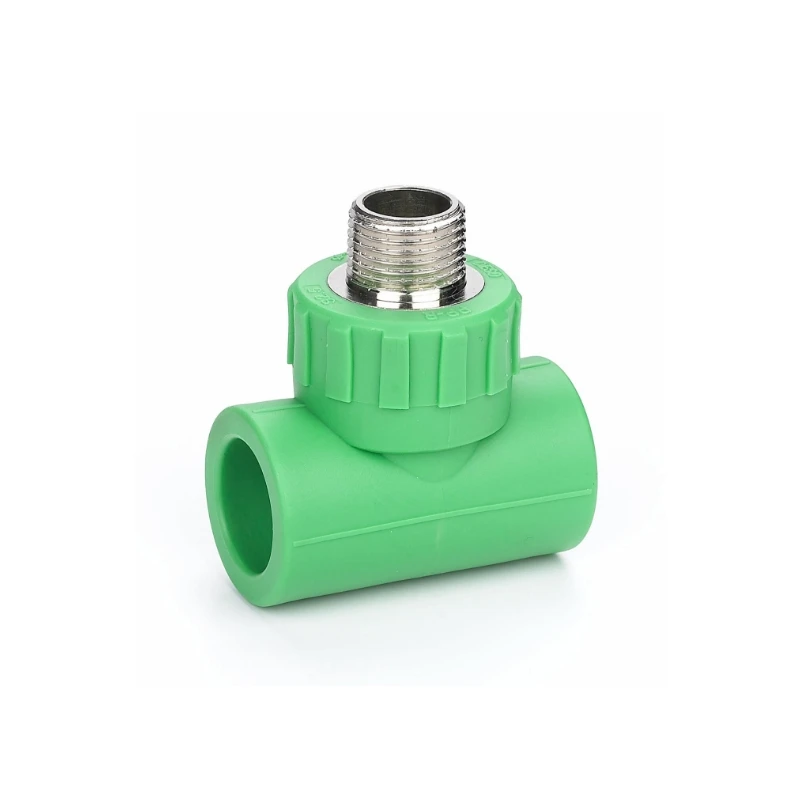
The PPR male tee is the counterpart of the female tee. It features external threads to connect plastic piping to metal components or threaded fittings. It’s useful in systems requiring easy disassembly for maintenance or upgrades.
Advantages:
- Strong threaded brass insert for long-term durability.
- Allows connection between PPR pipes and metal systems.
- Leak-proof and compatible with both hot and cold water networks.
Both male and female PPR tees are favored for mixed-material systems, reducing compatibility issues and installation time.
5. PPR Cross Tee

Unlike the standard three-way design, the PPR cross tee connects four pipes, forming a “plus” (+) shape. It is used when multiple flow directions are needed, such as in large plumbing grids or irrigation setups.
Key Features:
- Ensures even water distribution in four directions.
- Suitable for high-capacity plumbing systems.
- Manufactured to resist scale buildup and corrosion.
Because it balances flow and pressure, the PPR cross tee is often used in industrial networks, HVAC systems, and high-flow environments.
Comparison Table of PPR Tee Types
| Type | Design | Function | Common Applications | Advantages |
| PPR Equal Tee | Three equal outlets | Distributes water evenly | Home and commercial systems | Balanced pressure, easy installation |
| PPR Reducer Tee | One smaller outlet | Connects pipes of different diameters | High-pressure or multi-branch systems | Smooth pressure transition |
| PPR Female Tee | Internal brass threads | Connects PPR to metal | Faucets, valves, metal joints | Versatile, corrosion-resistant |
| PPR Male Tee | External brass threads | Mixed material systems | Industrial lines, hybrid setups | Strong connection, reusable |
| PPR Cross Tee | Four-way junction | Multi-directional water flow | HVAC, irrigation | Even distribution, efficient flow |
How to Choose the Right PPR Tee
Choosing the right PPR tee depends on several factors:
- System Requirements – Identify whether the line carries hot or cold water and note the pressure levels. PPR tees can handle temperatures from -20°C to 95°C, making them ideal for both domestic and industrial systems.
- Pipe Size Compatibility – Use a PPR equal tee for uniform pipe sizes or a PPR reducer tee if diameters differ.
- Material Match – For mixed systems, opt for PPR male or female tees to connect plastic pipes with metal parts.
- Application Area – For complex systems with multiple branches, use a PPR cross tee to balance flow.
- Certifications & Quality Standards – Always check for compliance with ISO, DIN, or CE certifications to ensure durability and leak-proof performance.
A trusted manufacturer like DESO Pipe provides certified, high-quality products suitable for diverse applications.
PPR Tee Price & Buying Guide
The PPR tee price varies depending on the type, size, and brand. Equal tees and reducer tees are usually more affordable, while threaded and cross tees cost slightly more due to added material and precision.
Typical Price Range (for reference):
- PPR Equal Tee: Low to medium price range.
- PPR Reducer Tee: Moderate, depending on size.
- PPR Threaded Tee (Male/Female): Slightly higher due to brass inserts.
- PPR Cross Tee: Higher range for industrial use.
When buying, consider:
- Wholesale PPR Tee Orders: For construction projects, buying from a China PPR tee wholesale supplier like DESO can reduce cost per piece.
- Bulk Discounts: Ordering directly from a manufacturer ensures consistent quality and faster delivery.
- After-Sales Support: Look for warranties and technical support to ensure long-term reliability.
Conclusion
PPR tees may look simple, but they play a major role in maintaining a plumbing system’s strength, efficiency, and safety. Whether you need a PPR equal tee for balanced water flow, a PPR reducer tee for size transitions, or a PPR female tee for metal connections, each type serves a unique purpose. Choosing the right one means fewer leaks, smoother water flow, and a longer-lasting pipeline.
If you’re sourcing for bulk or customized fittings, explore the complete collection at DESO Pipe — a trusted PPR pipe manufacturer offering certified, durable, and cost-efficient plumbing solutions. Discover DESO’s complete collection of PPR tee fittings and choose the right connector for your next project.


