


PPR pipe underground systems are rapidly becoming the top choice for secure, long-lasting water supply installations. Why? PPR (polypropylene random copolymer) offers unmatched corrosion resistance, antibacterial safety, and reliable heat fusion joints, which are critical for underground environments.
This blog will explore how PPR pipe underground solutions safeguard water distribution, why they outperform traditional materials, and how DESO Group leads in manufacturing globally certified, high-quality piping systems. Understanding the safety and efficiency of PPR water pipe installations can save time, money, and environmental impact.
Why Choose PPR Pipe for Underground Installation?

PPR pipes are uniquely suited for underground use due to their chemical stability, flexibility, and high resistance to pressure and temperature changes. Here’s how PPR water pipe systems improve underground safety:
- Corrosion Resistance: PPR resists acids, salts, and chemicals commonly found in soil, preventing leaks and contamination.
- Leak-Proof Joints: Heat fusion welding creates a stronger, seamless bond than the pipe.
- Longevity: With a service life exceeding 50 years, PPR is a one-time investment for most underground systems.
- Hygienic and Safe: Smooth inner walls prevent scaling and bacterial growth, ensuring clean water.
- Environmental Protection: Leak reduction and safe materials protect groundwater and soil quality.
These benefits make PPR pipe for underground installation the safer, longer-lasting choice for municipal and residential water systems.
Installation Considerations for PPR Pipe Underground
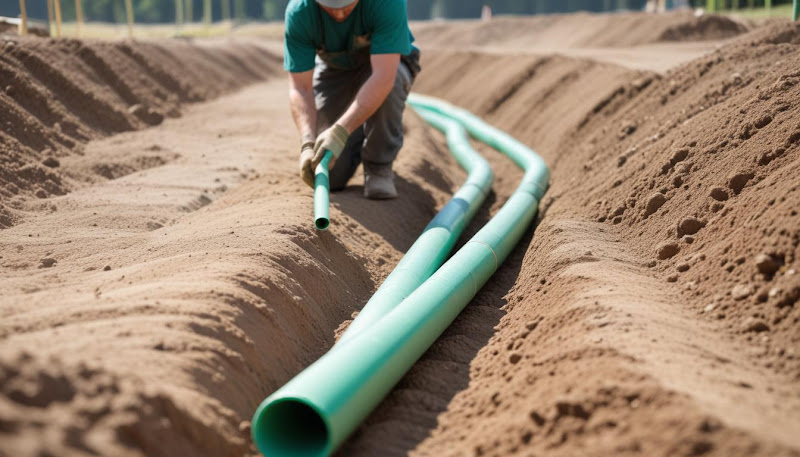
A safe underground PPR pipe installation depends on more than quality materials—it requires proper technique. Follow these best practices:
✅ Stable Ground Preparation
Excavate clean, level trenches free of rocks and roots. This prevents abrasion, pipe misalignment, and structural stress. Soft, unstable soils should be compacted before laying the pipe to prevent settling that can lead to sagging or fractures.
✅ Bedding & Backfill
Lay PPR water pipe on a bedding layer of sand or fine gravel no less than 100mm thick. This creates cushioning support and helps distribute external loads. Backfill should be applied in 150mm layers and compacted carefully to minimize voids and displacement.
✅ Sealing & Coverage
Use proper heat-fusion tools to ensure secure, homogeneous joints. In normal soil conditions, pipes should be buried with a minimum cover of 600mm or deeper in areas exposed to frost or traffic loads. Additional insulation or concrete slabs may be necessary in extreme conditions.
These procedures support long-term performance, structural safety, and reliability for PPR pipe for underground installation.

Key Benefits of Using DESO PPR Water Pipe Underground
DESO’s PPR pipes and fittings are designed with safety, durability, and environmental care in mind. Here’s what sets us apart:
🔹 Consistent Flow & Heat Resistance
Our piping systems maintain pressure integrity across varying soil temperatures—ideal for both cold regions and hot climates.
🔹 Antibacterial Protection
Smooth inner surfaces resist biofilm buildup and bacterial colonization, protecting public health.
🔹 Leak-Proof Connections
Heat-fused joints eliminate common leak points found in glued or threaded alternatives.
🔹 Customizable OEM/ODM Solutions
We offer tailored specifications for project requirements, including special fittings for high-difficulty underground layouts.
Why PPR Pipe Is a Smarter Long-Term Investment
PPR water pipe systems offer long-term durability with minimal upkeep, unlike PVC or metal pipes that corrode, crack, or require frequent maintenance. They’re light enough for easy installation yet strong enough for high-pressure flow and temperature swings. Plus, their hygienic benefits make them ideal for drinking water supply networks. If your project demands performance, safety, and sustainability, DESO’s PPR pipe for underground installation is your best bet.

Frequently Asked Questions (FAQ)
What is a PPR pipe used for underground?
Due to its safety and durability, PPR pipe underground is used in buried water supply systems for homes, cities, and agriculture.
Is PPR pipe safe for drinking water?
Yes. PPR pipe is non-toxic, corrosion-resistant, and certified for potable water.
How long do PPR water pipes last underground?
PPR pipes can last over 50 years with proper installation and conditions.
Can a PPR pipe handle freezing conditions?
Yes. It can expand slightly with frozen water, reducing the risk of cracks or bursts.
Does PPR pipe support high-pressure systems?
Yes. Due to their strong structure and fusion-welded joints, DESO PPR pipes handle high-pressure and hot water reliably.
How DESO Group Leads the Way in PPR Pipe Manufacturing

When choosing a PPR pipe manufacturer, quality and compliance matter. DESO Group stands out by combining technical excellence with certified reliability:
- ✅ Certified for Global Standards: Our PPR piping systems meet international certifications including ISO 9001, ISO 14001, ISO 45001, CE, AENOR (Spain), DVGW (Germany), and WRAS (UK).
- ✅ Advanced Automation: With 200+ high-precision machines, we produce over 10,000 tons annually, ensuring consistent quality and on-time delivery.
- ✅ R&D Driven: Our innovation center spans 544㎡ with 12 engineers and over 60 patented technologies.
- ✅ Trusted Worldwide: Exporting to over 40 countries with a robust network of 2,000+ distributors in China alone.
View our full product range here
Conclusion: Safer Infrastructure Begins with Better Pipe Systems
At DESO Group, our mission is to provide safe, green, and intelligent piping solutions to the world. We don’t just manufacture pipes—we engineer peace of mind for infrastructure developers across 40+ countries. Backed by certifications, industry innovation, and a commitment to quality, our PPR pipe underground systems deliver unmatched performance from installation to decades of use.
Explore our PPR pipe product catalog or contact our team to get started on a safer, more efficient piping system.


