


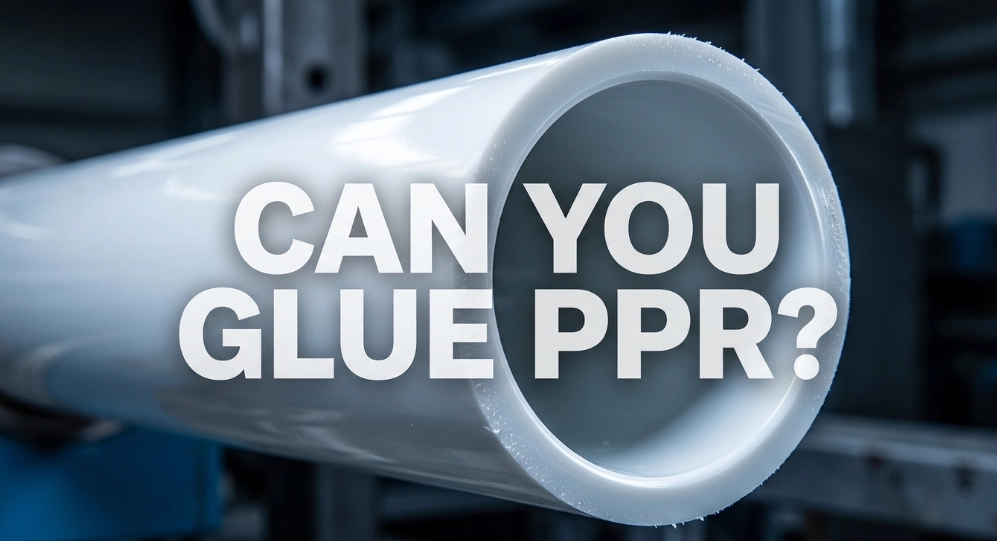
No, you cannot reliably glue PPR pipes. PPR achieves a leak-free seal only through heat fusion, where the pipe and fitting melt and bond as one solid piece.
บทความนี้อธิบายว่าทำไมกาวจึงไม่ติดกับ PPR วิธีการต่อวัสดุอย่างถูกต้อง และบทบาทของข้อต่อแบบเกลียวหรือหน้าแปลน คุณจะได้เรียนรู้ความเสี่ยงของการใช้กาว เคล็ดลับการติดตั้งจริง และตัวอย่างจากระบบประปาและ HVAC.
ท่อ PPR สามารถติดกาวได้หรือไม่?
PPR ย่อมาจาก Polypropylene Random Copolymer ซึ่งเป็นเทอร์โมพลาสติกที่ออกแบบมาสำหรับน้ำร้อนและน้ำเย็น พื้นผิวของมันทนทานต่อสารเคมี ดังนั้นกาวจึงไม่สามารถละลายและยึดเกาะได้เหมือนกับพลาสติกชนิดอื่น.
Why Gluing Looks Easy But Fails
ข้อต่อที่ใช้กาวอาจดูแข็งแรงในตอนแรก ภายใต้แรงดันและความร้อน การสัมผัสพื้นผิวจะเสื่อมสภาพอย่างรวดเร็ว ส่งผลให้เกิดการรั่วซึม ความเสี่ยงของการปนเปื้อน หรือข้อต่อล้มเหลวทั้งหมด.
หลักการทางวิศวกรรมที่ถูกต้องนั้นง่าย การต่อท่อ PPR ที่เหมาะสมมาจากการหลอมรวมโมเลกุล ไม่ใช่การยึดติดพื้นผิว ความร้อนจะสร้างผนังที่ต่อเนื่องเป็นชิ้นเดียวตลอดข้อต่อ.
ทำไมกาว PVC แบบดั้งเดิมจึงใช้ไม่ได้กับท่อ PPR?
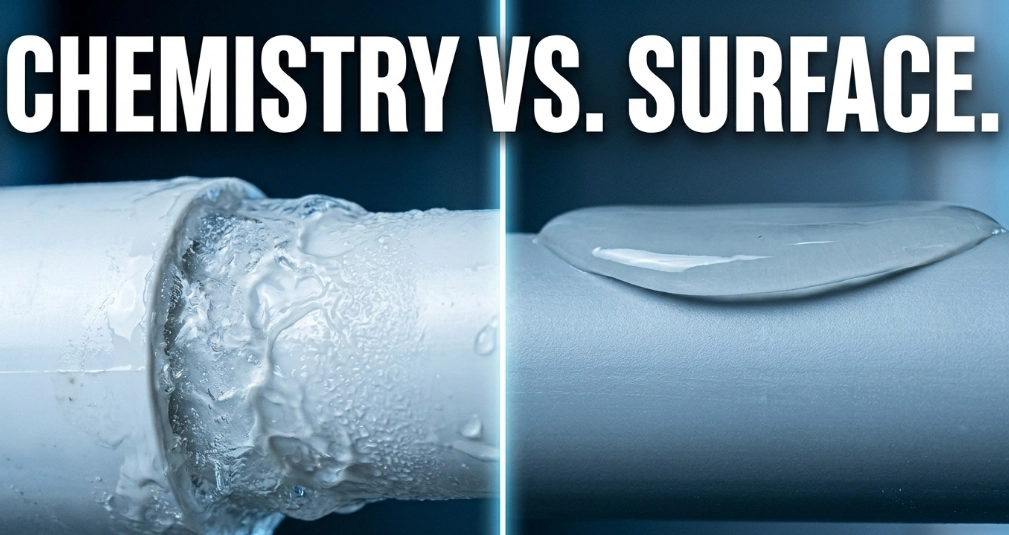
กาว PVC ทำงานโดยการทำให้พื้นผิว PVC อ่อนตัวลงด้วยสารเคมี เพื่อให้ชิ้นส่วนทั้งสองหลอมรวมเข้าด้วยกัน PPR ไม่ทำปฏิกิริยากับตัวทำละลายเหล่านี้ ดังนั้นจึงไม่มีการยึดเกาะที่แท้จริงเกิดขึ้น.
Different Materials, Different Chemistry
กาว PVC ทำมาสำหรับโพลีไวนิลคลอไรด์ บน PPR มันจะอยู่บนพื้นผิวโดยไม่ละลายสิ่งใด แม้แต่กาวอีพ็อกซี่ที่แข็งแรงก็ไม่สามารถเทียบเท่าข้อต่อที่หลอมรวมได้.
The Hidden Damage Risk
การใช้กาวผิดประเภทอาจทำให้พื้นผิว PPR เสื่อมสภาพได้ ซึ่งจะทำให้บริเวณที่คุณต้องการปิดผนึกอ่อนแอลง นี่คือเหตุผลหนึ่งที่กาวท่อ PPR ไม่เป็นที่ยอมรับในงานติดตั้งระดับมืออาชีพ.
ท่อ PPR เข้าร่วมกันได้อย่างไร?

ระบบ PPR อาศัยวิธีการที่ใช้ความร้อนและวิธีการทางกลเสมอ เป้าหมายคือการสร้างข้อต่อที่แข็งแรงเท่ากับผนังท่อเอง คู่มือ การเชื่อมด้วยความร้อน อธิบายหลักการทางวิทยาศาสตร์อย่างละเอียด.
การเชื่อมซ็อกเก็ต
การหลอมแบบเบ้าเป็นมาตรฐานสำหรับท่อขนาดเล็กและขนาดกลาง เครื่องมือหลอม จะให้ความร้อนแก่ปลายท่อและเบ้าของข้อต่อที่อุณหภูมิประมาณ 260°C ชิ้นส่วนจะถูกดันเข้าหากันโดยไม่บิด จากนั้นจับไว้จนกว่าจะเย็น.
กระบวนการหลอมท่อ PPR นี้จะสร้างข้อต่อที่เป็นเนื้อเดียวกัน โซ่โพลีเมอร์จะเชื่อมต่อกันทั่วทั้งสองพื้นผิว สายแยกส่วนใหญ่ในที่พักอาศัยและเชิงพาณิชย์ใช้วิธีนี้.
ข้อต่อเกลียว
ข้อต่อแบบเกลียว เชื่อมต่อ PPR กับส่วนประกอบโลหะ เช่น วาล์ว มิเตอร์ หรือปั๊ม ข้อต่อเหล่านี้ใช้แกนทองเหลืองฝังเพื่อความแข็งแรง รองรับการเปลี่ยนถ่ายในกรณีที่ไม่สามารถหลอมรวมได้โดยตรง.

การเชื่อมต่อแบบมีหน้าแปลน
การเชื่อมต่อแบบหน้าแปลน เหมาะสำหรับเส้นผ่านศูนย์กลางที่ใหญ่ขึ้นและสายอุตสาหกรรม โบลต์และปะเก็นสร้างการปิดผนึกที่ถอดออกได้และทนแรงดัน ทำให้การตรวจสอบและบำรุงรักษาระบบขนาดใหญ่ทำได้ง่ายขึ้น.
| วิธีการเชื่อมต่อ | การใช้งานที่ดีที่สุด | ประเภทการเชื่อมต่อ |
| การหลอมรวมเบ้า | สายขนาดเล็กถึงปานกลาง | ถาวร, หลอมรวม |
| ข้อต่อแบบเกลียว | การเชื่อมต่อโลหะ | เชิงกล, ถอดออกได้ |
| การเชื่อมต่อแบบหน้าแปลน | สายขนาดใหญ่/อุตสาหกรรม | เชิงกล, ถอดออกได้ |
มีสถานการณ์ใดบ้างที่ใช้กาว?
ไม่มีการใช้กาวในการปิดผนึกข้อต่อ PPR กับ PPR ฟังก์ชันการปิดผนึกมาจากการหลอมรวมเสมอ ไม่ใช่กาว.
Where Sealing Aids Appear
สำหรับการเชื่อมต่อแบบเกลียว ผู้ติดตั้งอาจใช้เทป PTFE หรือน้ำยาซีลเกลียว สิ่งเหล่านี้ช่วยให้เกลียวปิดผนึกได้ ไม่ใช่ตัวท่อ พวกมันรองรับข้อต่อเชิงกล ไม่ใช่ข้อต่อที่หลอมรวม.
ดังนั้น หากคุณกำลังเรียนรู้วิธีต่อท่อ PPR โปรดจำกฎไว้ ใช้การหลอมรวมสำหรับส่วน PPR และข้อต่อที่ได้รับการอนุมัติสำหรับการเชื่อมต่อกับวัสดุอื่น.
ความเสี่ยงของการใช้กาวกับระบบท่อ PPR คืออะไร?
การใช้กาวกับ PPR ทำให้เกิดความล้มเหลวที่มักปรากฏในอีกหลายสัปดาห์หรือหลายเดือนต่อมา ข้อบกพร่องที่ซ่อนอยู่นี้มีค่าใช้จ่ายสูงในการซ่อมแซม.
Common Failure Points
- การรั่วซึมหลังผนังและเพดานที่ตกแต่งแล้ว
- Joint separation under thermal expansion
- Water hammer stress on weak bonds
- Possible contamination of potable water
A Residential Case Example
Consider a home hot water line glued instead of fused. It may hold during a quick test. After repeated heating cycles, the joint loosens and leaks inside the wall cavity.
An HVAC and Industrial Case Example
In an HVAC chilled water loop, constant temperature swings stress every joint. A glued connection cannot survive this cycling. Proper PPR pipe welding prevents these failures across long industrial runs.
What Are The Best Practices For Reliable PPR Pipe Installation?
Strong joints start with clean preparation and correct tools. The fusion process should never be rushed.
Prepare And Fuse Correctly
Cut the pipe square and remove burrs. Wipe surfaces clean of dust and moisture. Heat to the right temperature, join without rotation, and hold steady while cooling.
Test Before Turnover
Always pressure test before handover. Trapped air can create false readings, so release it slowly. Our คู่มือการทดสอบแรงดัน shows the full step-by-step method
Design For The Whole System
On large projects, plan for thermal movement and pressure zoning. Using matched pipes and fittings keeps every joint fusing within the same range. Our commercial PPR pipe system guide covers this design logic
When welding PPR pipes, consistent material quality matters most. Mixed brands can fuse unevenly and create weak points.
Why Choose DESO PPR Pipe And Fitting Systems For Secure Fusion Connections?
Fusion only works well when pipes, fittings, and tools share the same standard. That is why a complete, single-source system reduces installation risk.
DESO Pipe, a ppr pipe manufacturer, has built piping systems since 2004. The 30,000 m² factory runs 200+ automated machines and 50+ testing devices, with annual output above 10,000 tons.
DESO holds 60+ patents and exports to 40+ countries. Products carry CE, AENOR, DVGW, WRAS, ISO 9001, ISO 14001, and ISO 45001 certifications, backed by a 50-year warranty.
DESO systems serve potable water, HVAC, industrial fluid conveyance, and agricultural irrigation. Hot-melt and electrofusion fittings work together for secure, leak-free joints.
สำรวจทั้งหมด DESO product collection and catalog to match the right pipes, fittings, and tools for your project.
คำถามที่พบบ่อย
What Is The Correct Way To Join PPR Pipes?
Heat fusion is the standard method. Socket fusion suits most lines, while threaded or flanged fittings handle transitions to metal or large industrial pipes.
Why Does Heat Fusion Create A Stronger Joint?
Fusion melts the pipe and fitting into one continuous material. The joint becomes as strong as the pipe wall, with no surface gap to fail.
Do PPR Joints Ever Need Sealant?
Only threaded transition fittings may use PTFE tape or thread sealant. PPR-to-PPR fusion joints need no glue or sealant at all.


