


Quick answer
The same PPR pipe can be used for hot and cold water if its pressure class suits the temperature and pressure of the hot-water system. A higher-pressure series such as PN20 can also carry cold water, but PN20 is not necessary for every line. DESO Standard PPR Pipe is available from PN10 to PN20 for different system requirements.

Can the Same Type of PPR Pipe Be Used for Both Cold and Hot Water?
Yes. The more important thing is whether the chosen pipe series can handle the more demanding operating environment, which is typically the hot-water side.
At the same outside diameter, a higher-PN series has a thicker wall and greater pressure capacity under the same temperature conditions. So if you correctly specify the series, the same PPR pipe hot water systems require can also cater to cold-water lines.
What Is the Real Difference Between Cold- and Hot-Water PPR Pipe?
For standard PP-R, the main differences come down to wall thickness, pressure class, and operating conditions.
DESO's standard PPR pipe comes in PN10/SDR11, PN12.5/SDR9, PN16/SDR7.4, and PN20/SDR6 series. At the same outside diameter, the wall gets thicker as the PN increases.
Take a 25 mm pipe as an example. A PN10 pipe has a wall around 2.3 mm thick, while a PN20 pipe has a wall around 4.2 mm thick. The thicker wall also leaves a smaller internal bore.
Temperature matters too. The pressure a PPR pipe can handle decreases as the operating temperature rises. This means a PPR pipe temperature rating and its pressure requirements need to be considered together. PN20 does not mean the pipe can continuously carry 20 bar at every temperature.
Do PPR Pipe Colors Tell You Whether It Is for Hot or Cold Water?
Although colors can help with identification, you shouldn’t use them as a technical specification.
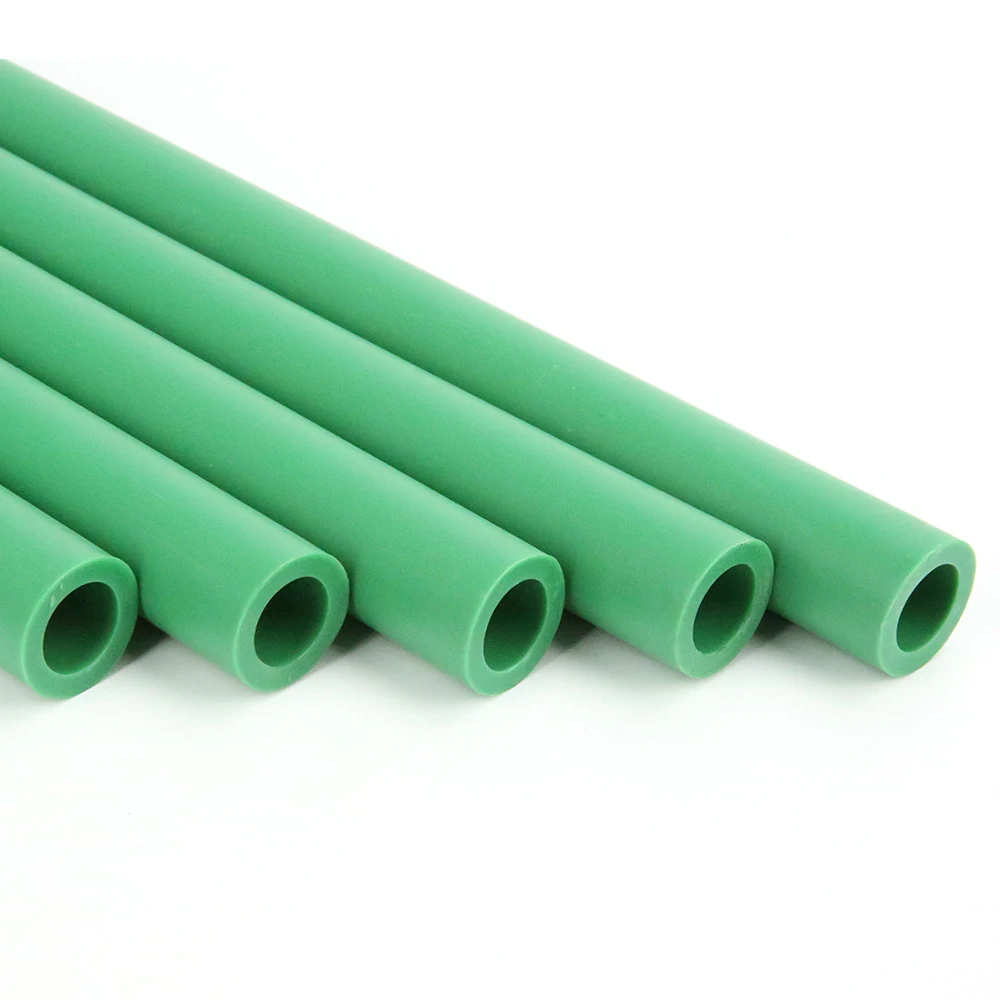
DESO uses red-line and blue-line conventions for hot- and cold-water applications. Red-line pipe can also carry cold water, while blue-line pipe is designated for cold-water service. Green pipes may also be used for general applications.
Since these conventions often vary between manufacturers, it’s best to use color as a visual guide. Then you can verify the PN/series and project requirements. For more detail, see our guide to PPR pipe color lines.
When Can You Use a Higher-PN Pipe for a Lower-PN Application?
A PPR pipe PN20 chosen for hot water can generally also carry cold water as long as it meets the project requirements.
The tradeoff to consider is that at 25 mm outside diameter, going from PN10 to PN20 brings the internal diameter down from about 20.4 mm to 16.6 mm. With less space for water to flow through, a designer has to first check the system’s flow requirements before automatically swapping PN10 for PN20 at the same diameter.
Another thing to keep in mind is that higher-PN pipes use more material. So if PPR pipe for cold water already suits the operating conditions, PN20 may offer little practical benefit.
What Are 3 Common Mistakes When Selecting PPR for Hot and Cold Water?
1. Assuming “hot water = PN20” without checking the system. PN20 is commonly selected as a PPR hot water pipe for more demanding conditions, but the correct series depends on operating temperature and pressure.
2. Selecting by stripe color instead of the pipe specification. Color makes hot and cold lines easier to identify, but the PN/series and project requirements determine whether the pipe is suitable.
3. Treating the PN number as the working pressure at every temperature. When asking can PPR pipe be used for hot water, remember that allowable pressure decreases as temperature rises. Our post on selecting PPR pipe for different conditions explains this relationship further.
PPR Hot vs Cold Water Selection Checklist
| Project Condition | What to Check |
| Cold-water line | Pressure, diameter and project standard |
| Hot-water line | Temperature + pressure together |
| Same pipe for both | Pipe must satisfy the more demanding condition |
| Switching to higher PN | Recheck internal bore and flow |
| Pipe color / stripe | Use for identification only |
| Final approval | Verify PN/SDR and pressure-temperature data |
Perguntas frequentes
1. Can I use PN10 PPR pipe for hot water?
PN10 is generally used for cold water rather than typical pressurized hot-water systems. For hot water, you need to check whether its classificação de pressão is sufficient at the system’s operating temperature.
2. What is the difference between PN10 and PN20 PPR pipe?
At the same outside diameter, PN20 has a thicker wall than PN10, giving it greater pressure capacity under the same temperature conditions. The tradeoff is a smaller internal bore.
3. Are red and green PPR pipes the same material?
They can be. You can’t figure out the pipe’s pressure rating or material by just the color. Instead, check the actual specifications to understand what you’re dealing with.
4. Can I use the same PPR pipe for both hot and cold water?
It depends. If the PPR series you buy meets the pressure and temperature requirements of the hot-water line, you should be able to use it for the cold-water line too.
5. What does the color stripe on PPR pipe mean?
The stripe generally indicates the pipe’s intended application. DESO typically uses blue for cold-water and red for hot-water lines, but you must still check the pipe’s actual specifications.
6. Is PPR pipe suitable for hot water?
Yes. PPR pipe is suitable for hot water when its pressure class is rated for the system’s operating temperature and pressure. As higher temperatures reduce allowable pressure, the correct pipe series must be selected for the intended conditions.


