


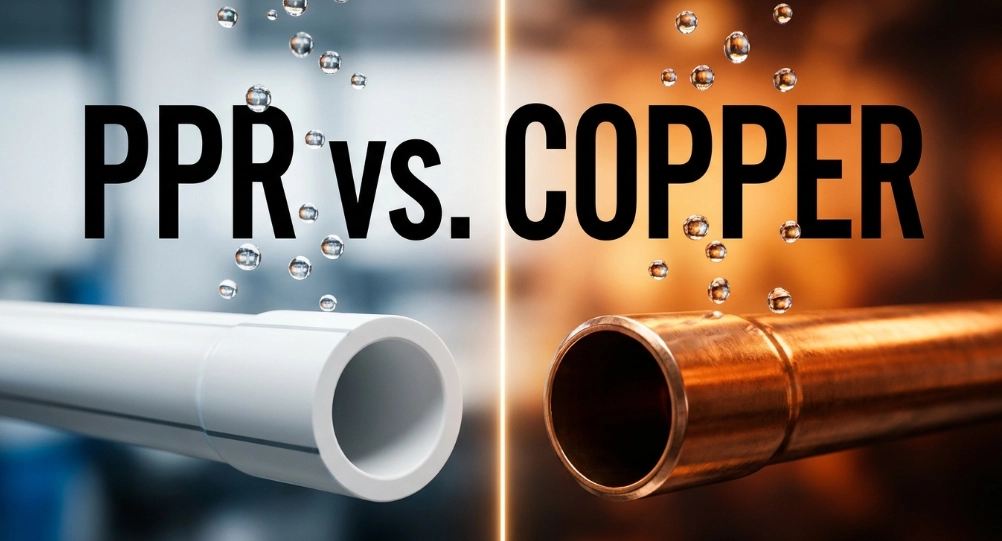
When comparing ppr vs copper pipes for most modern water systems, PPR lowers cost and installs faster while resisting corrosion. Copper still wins in extreme-heat and antimicrobial cases.
This article breaks down the differences in plain terms. You will learn how each material handles cost, lifespan, and installation. We also cover which pipe fits specific projects, so engineers, contractors, and buyers can decide with confidence.
What Are PPR Pipes and Copper Pipes?
Both materials move water and fluids, but they behave very differently in real systems.
How PPR Pipes Work
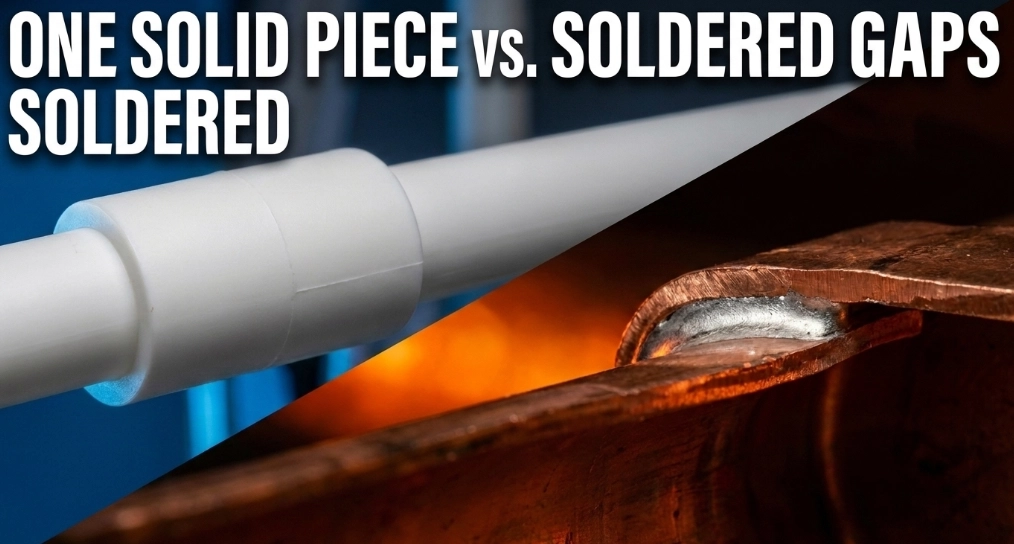
PPR stands for polypropylene random copolymer, a plastic engineered for plumbing. It joins through fusione termica, which melts pipe and fitting into one solid piece. PPR resists corrosion, scaling, and most chemicals. It suits hot and cold water, irrigation, and industrial fluid lines.
How Copper Pipes Work
Copper is a metal pipe used for decades in homes and HVAC systems. It joins by soldering or brazing, which needs flame and skilled labor. Copper transfers heat well and naturally limits bacteria. However, acidic water can corrode it over time.
How Do PPR and Copper Compare at a Glance?
The table below summarizes the core technical and practical differences.
| Fattore | Tubo PPR | Tubo di rame |
| Materiale | Polypropylene random copolymer | Metallo |
| Resistenza alla corrosione | Does not rust or scale | Può corrodersi in acqua acida |
| Conducibilità termica | Basso (minore dispersione di calore) | Alto |
| Metodo di giunzione | Fusione termica | Saldatura / brasatura |
| Peso | Leggero | Pesante e rigido |
| Durata di servizio | 50+ anni | Diversi decenni in acqua ideale |
| Costo del materiale | Inferiore | Più alto e volatile nei prezzi |
| Migliore adattamento | Fornitura idrica, industriale, irrigazione | HVAC, refrigerazione, tratti a vista |
Questo riepilogo aiuta a un rapido confronto delle tubazioni per acqua calda prima di un'analisi più approfondita.
Which Pipe Costs Less Over the Full Lifecycle?
Il costo raramente è solo il prezzo di acquisto. Gli acquirenti intelligenti valutano insieme materiale, manodopera e manutenzione a lungo termine.
Material Cost
Il PPR utilizza materie prime a basso costo, quindi i prezzi rimangono più stabili. Il rame segue i mercati globali dei metalli, che cambiano settimanalmente. Per grandi appalti, tale volatilità rende più difficile bloccare i budget per il rame. Questo è un motivo chiave per cui il PPR appare come alternativa al tubo di rame nei documenti di gara.
Labor Cost
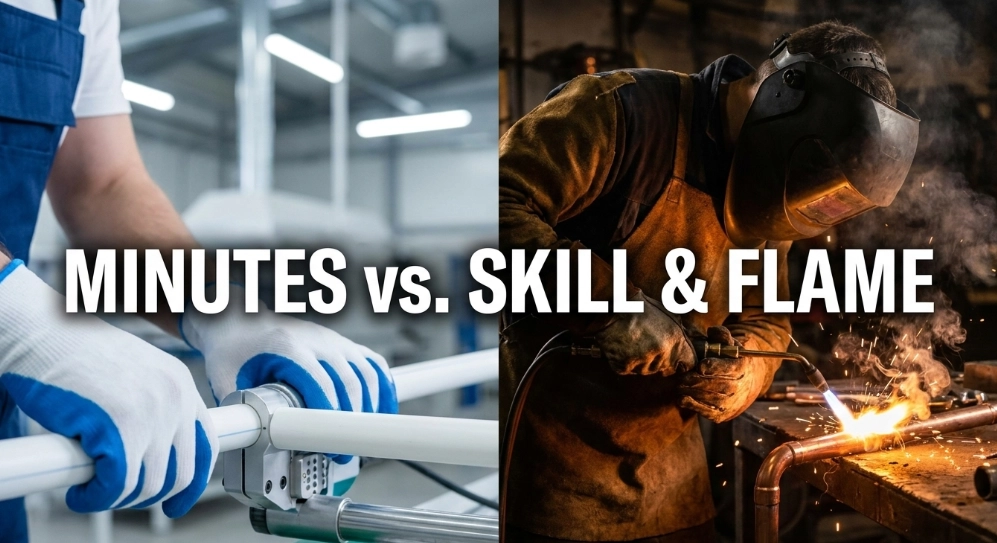
PPR heat fusion is quick and needs only basic training. A crew can finish many joints in minutes. Copper soldering requires flame, flux, cleaning, and certified skill. That extra time and expertise raises labor cost on every connection.
Maintenance Cost
PPR resists scaling and corrosion, so repair calls drop. Copper in poor water conditions can develop pinhole leaks within years. Across a full system lifecycle, many projects report 30 to 50 percent savings with PPR.
Bottom line: PPR usually delivers lower total cost in ppr pipe vs copper plumbing decisions.
How Long Does Each Pipe Last?
Both pipes are durable, but their lifespan depends on different conditions.
PPR Pipe Longevity
PPR pipes commonly last 50 years or more at standard operating temperatures. Because PPR is a polymer, it does not react with water, oxygen, or minerals. Its performance stays predictable across varied water chemistry.
Copper Pipe Longevity
Copper can last for decades in clean, balanced water. In low-pH or aggressive water, though, it degrades faster. So copper longevity is strong but condition-dependent.
How Does Installation Differ Between PPR and Copper?
Installation speed directly affects project timelines and labor budgets.
Joining and Tools
PPR needs a heat fusion welder and a few collars or sockets. Copper needs a torch, solder, and flux. The PPR process is faster and carries lower fire risk on site.
Joint Strength and Site Safety
Heat fusion fuses pipe and fitting into one continuous body, reducing leak points. Copper joints rely on perfect solder flow. Any flaw can become a future leak. For an adjacent material angle, see this comparison of PPR versus stainless steel pipe.

Which Pipe Performs Better in Different Applications?
Material choice should match the operating environment, not habit. Here is how each performs across common project types.
Residential Hot Water Retrofit
A homeowner replacing old corroded lines benefits from PPR. Its low thermal conductivity reduces heat loss, and lightweight pipe speeds the retrofit. This makes the copper vs plastic pipe choice clear for budget-focused renovations.
Hotel and Apartment Plumbing
Large builds need fast, consistent installs across many floors. PPR fusion lets crews standardize joints and keep schedules tight. Stable pricing also helps contractors win competitive tenders.
Industrial Fluid Lines
For chemical or food-processing systems, PPR resists corrosion and many aggressive fluids. Proper fittings, like a well-engineered PPR cross fitting, keep flow stable under pressure.
High-Heat and HVAC Cases
Copper still leads where very high heat transfer matters, such as refrigeration. For extreme exposed runs, its strength and heat handling remain useful.
Why Are More Projects Switching from Copper to PPR?
Three factors drive the shift: cost stability, faster installation, and corrosion-free service.
Copper theft from job sites adds another concern, since scrap value attracts theft. PPR carries no such resale risk. Buyers managing scale and tight schedules increasingly favor PPR for predictable outcomes.
Manufacturing rigor also matters here. PPR made from premium raw materials, with documented testing, behaves consistently in the field. That consistency reduces failures during transport, installation, and long-term use.
Conclusione
When weighing ppr vs copper pipes, PPR is the ideal choice for most water supply and industrial projects where cost, speed, and corrosion resistance are priorities. Copper is better suited for specialized high-heat or refrigeration applications.
Tubo DESO has specialized in PPR piping systems since 2004. As a PPR pipe manufacturer, we export to over 40 countries, using premium raw materials from Borealis and Hyosung. Our facility produces over 10,000 tons annually, and we support large-volume servizi OEM e ODM orders with extensive customization options. All products meet international standards, including ISO 9001, CE, and WRAS.
Ready to plan your next project? Explore the DESO product collection and download our catalogue to find the right pipe for your needs.
Domande frequenti
Does PPR Pipe Work for Hot Water?
Yes. PPR handles hot and cold water and resists heat well. Its low thermal conductivity also reduces heat loss, which improves energy efficiency in hot water lines.
How Long Do PPR Pipes Last?
Under standard conditions, PPR pipes last 50 years or more. Because they do not corrode or scale, their service life stays predictable across different water chemistries.
Is PPR Installation Faster Than Copper?
Yes. PPR uses heat fusion, completing joints in minutes with basic training. Copper needs soldering, flame, and skilled labor, which slows installation.


