


Deciding between PEX vs PPR underfloor heating configurations depends entirely on whether your project prioritizes the rapid installation of flexible floor loops or the permanent structural security of high-temperature distribution mains. In high-performance radiant layouts, field engineers typically specify PEX for the intricate floor patterns to eliminate buried joints while reserving rigid PPR for the high-demand supply headers where thermal stability is critical.
The separation of material application from a strategic standpoint ensures that contractors can take advantage of the particular strengths that the polymers exhibit without jeopardizing the durability of the overall installation. Through proper use of the material in relation to the heat load, it is possible to guarantee a watertight installation as well as longevity beyond fifty years.
Why PEX Is the Default Choice for Residential UFH

For residential installations, the main reason why PEX piping is the accepted industry standard is due to the fact that PEX acts as a high-quality flexible water line capable of being laid down in straight lines up to 300 meters long within the floor grid. With this flexibility, there can be a radiant floor heating system without any hidden connections under the screed. Every joint eliminated in the slab is a removed failure point; PEX’s ability to expand up to three times its diameter in freezing conditions also provides a safety margin in unheated sites where temperatures might drop to -40°C.
From a labor efficiency standpoint, PEX utilizes mechanical crimp or push-to-connect fittings that do not require specialized heat tools, making it the faster option for high-volume housing developments. However, the very flexibility that makes PEX ideal for floor loops can lead to “snaking” or sagging in vertical runs if the pipe is not supported every few feet. While it handles short-term exposure up to 93°C, prolonged exposure to the high-temperature outputs of traditional boilers can lead to material softening and a gradual reduction in the pressure rating over time.
Where PPR Has an Edge (Industrial/High-temp Radiant Systems)

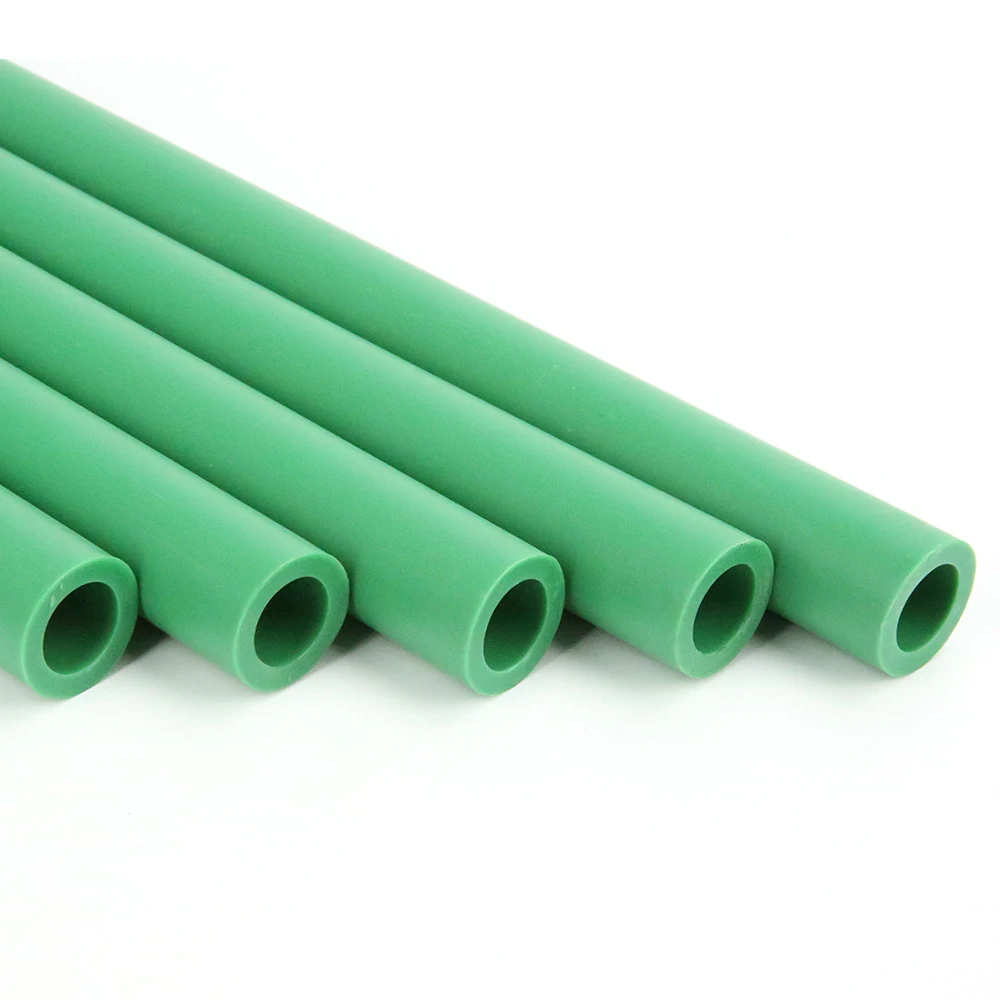
For a large-scale hydronic heating installation, Polypropylene Random Copolymer (PPR) is often the preferred choice for distribution mains and risers due to its superior thermal stability. PPR is a rigid thermoplastic that handles continuous operating temperatures of 95°C and manages peak surge temperatures of 110°C without compromising the structural integrity of the pipe wall. For projects where standard PPR is selected instead of PEX for distribution mains, many engineers also evaluate PP-R CT because it provides 25% higher pressure resistance while retaining the same installation method.
The primary advantage of PPR in a commercial context is the connection method: heat fusion joints. This process molecularly bonds the pipe and fitting into a single, seamless unit, creating a connection that is technically the strongest part of the network. To further minimize mechanical stress in long distribution runs, a PPR fiber composite pipe is frequently specified. This reinforced material reduces the coefficient of thermal expansion by up to 75% compared to standard plastics, ensuring that main lines remain straight and true even under the constant temperature cycles of a commercial HVAC system.
Material Comparison Table
Understanding the operational differences between PEX vs PPR underfloor heating materials is essential for making an informed procurement decision based on international standards like ISO 15874.
| Selection Criteria | PEX | PPR | Best For |
|---|---|---|---|
| Residential Floor Loops | Excellent | Good | PEX |
| Commercial Distribution Mains | Moderate | Excellent | PPR |
| Installation Speed | Fast (Flexible Coils) | Moderate (Heat Fusion) | PEX |
| High-Temperature Operation | Good (Short-term) | Excellent (95°C Continuous) | PPR |
| Leak Resistance in Main Lines | Mechanical Fittings | Fusion-Welded Joints | PPR |
| Freeze Resistance | Excellent | Moderate | PEX |
| Long-Term Structural Stability | Good | Excellent | PPR |
| Typical Underfloor Heating Application | Floor Heating Circuits | Headers, Risers & Manifolds | Hybrid System |
DESO’s Recommendation by Project Type
For most commercial and industrial flooring applications, a hybrid system provides the most reliable balance of speed and durability. We recommend utilizing PEX for the floor circuits to take advantage of its seamless loop routing, while using PPR pipe for all distribution mains, risers, and manifold headers. This ensures that the components subjected to the highest thermal and pressure loads are protected by the molecular strength of fused connections, which do not rely on aging O-rings or mechanical pressure to stay sealed.
PPR is often the preferred choice for distribution mains in sensitive environments like hospitals and schools because it is food-grade, non-toxic, and fully compliant with global safety regulations like WRAS and AENOR. By choosing pipes manufactured from premium raw materials like Borealis or Hyosung, project managers can guarantee that the water remains pure and the system remains free from chemical leaching or internal scaling. For high-pressure industrial specs, upgrading the mains to a PP-R CT system ensures the highest safety margins and long-term performance currently available in the polymer market.
Conclusion
Ultimately, choosing between PEX vs PPR underfloor heating comes down to the specific mechanical stresses of the zone being installed. While PEX is the faster, more flexible choice for residential floor loops, the thermal stability and leak-proof nature of fusion-welded PPR make it the superior choice for high-temperature distribution networks. Investing in a hybrid configuration that utilizes DESO PPR Pipes for the distribution backbone is the smartest way to ensure a maintenance-free radiant system that will reliably serve the building for many decades to come.
FAQ
Which is better for hot water systems, PPR or PEX?
PPR is the superior choice for consistent hot water supply because it withstands continuous temperatures of 95°C without material softening or degrading, whereas PEX is better suited for lower-temperature floor circuits.
How do contractors prevent joint failures in radiant systems?
Professionals eliminate joints in the slab by using long, continuous PEX coils and utilize professional digital welding equipment for all distribution mains to create a molecular bond that cannot loosen over time.
Is PPR safe for drinking water in combined heating systems?
Yes. High-quality PPR is non-toxic and compliant with international food-grade standards such as NSF/ANSI 61, making it suitable for potable water delivery when manufactured and certified to recognized international standards.


