


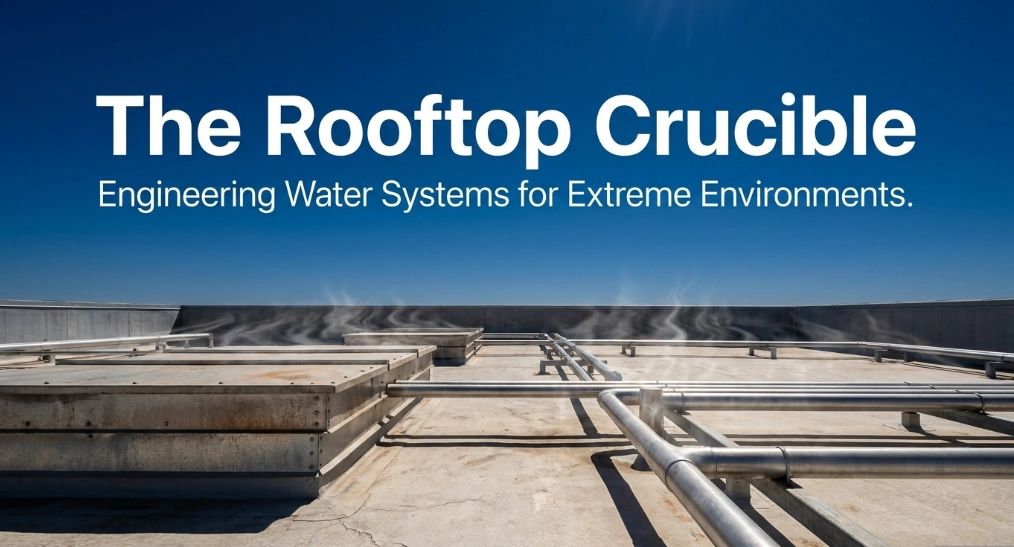
The best pipe for a rooftop water system is a UV-resistant PPR pipe, because it handles sunlight, heat, and pressure without cracking. This article explains why rooftops are hard on pipes, how common materials compare, and how to choose the right one for your project.
You will also see three practical case examples and clear selection tips.
What Challenges Do Rooftop Water Systems Face?
Rooftops expose pipes to conditions that indoor plumbing never sees. Understanding these stresses helps you pick a pipe that lasts.
Constant UV Exposure
Sunlight is the biggest threat to any roof. Standard plastic pipes fade, chalk, and grow brittle after months of direct UV. A weak outdoor water pipe can crack and leak within a few years.
Wide Temperature Swings
Roof surfaces heat up fast during the day and cool sharply at night. This daily cycle expands and contracts the pipe. Materials with poor thermal stability loosen at joints over time.
Pressure Variations
Rooftop tanks, booster pumps, and solar loops create shifting pressure. A rooftop pipe must hold steady under both high and low pressure without deforming.
What Pipe Materials Are Commonly Used On Rooftops?
Several materials appear in rooftop projects. Each behaves differently once the sun and heat hit it.
Standard PPR
Standard PPR handles hot and cold water well. It fuses into strong joints. However, it lacks a protective outer layer, so it needs shading or insulation outdoors.
UV Resistant PPR
This version adds a UV-blocking outer layer or stabilizer. It keeps its strength in direct sunlight. That makes it a strong outdoor plumbing pipe for exposed rooftop runs. Our guide on building UV protection into plastic pipes explains how this layer works.
HDPE
HDPE resists sunlight and chemicals. It suits cold water and drainage. It is less ideal for hot water lines and uses bulkier fusion equipment.
CPVC
CPVC tolerates hot water and holds pressure. It becomes brittle under long UV exposure. Painting or wrapping is often required outdoors.
How Do Rooftop Pipe Materials Compare?
The table below summarizes how these materials perform on exposed rooftops.
| Feature | Standard PPR | UV Resistant PPR | HDPE | CPVC |
| UV Resistance | Low without shielding | High | High | Low without coating |
| Hot Water Suitability | Good | Good | Limited | Good |
| Installation | Heat fusion | Heat fusion | Butt/electrofusion | Solvent cement |
| Lifespan Outdoors | Short if exposed | Long | Long | Moderate |
The takeaway is clear. For hot and cold rooftop lines in direct sun, UV-protected PPR balances heat tolerance and sun resistance better than the others.
Why Is UV-Resistant PPR Becoming Popular For Rooftop Projects?
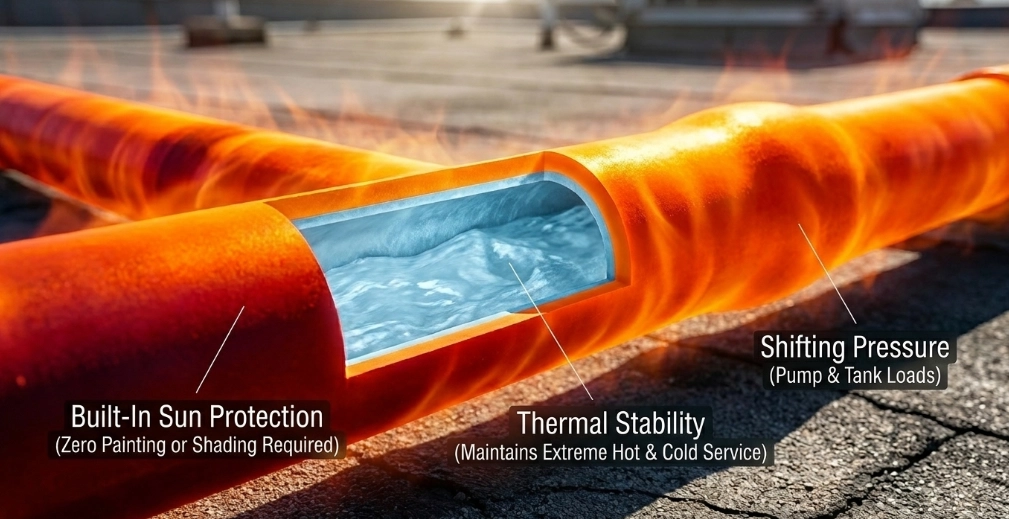
More engineers now specify this material for exposed water lines. The reasons are practical.
Built-In Sun Protection
The protective layer removes the need for painting or wrapping. This cuts labor and maintenance on large roofs.
Strong Fused Joints
PPR joins through heat fusion, which melts the pipe and fitting into one piece. These joints resist leaks better than glued or threaded connections.
Wide Temperature Range
PP-R and PP-RCT materials handle both hot and cold service. That suits solar heaters, tanks, and general supply lines. For extra thermal stability, many teams also review fiberglass PPR piping for outdoor insulation.
What Do Rooftop Case Studies Show In Real Projects?
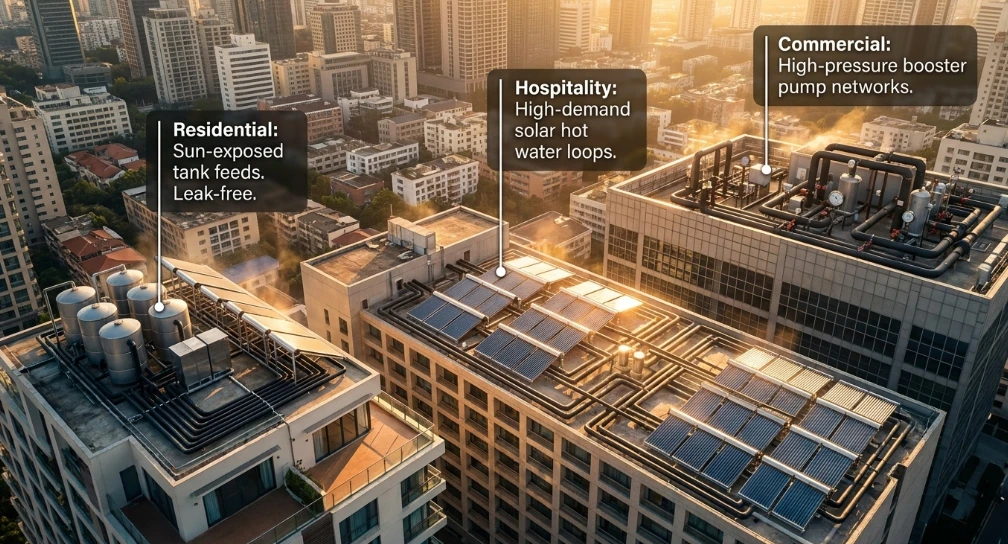
Real installations show how material choice affects long-term results. These examples reflect common field patterns.
Residential Buildings
A homeowner replaces cracked exposed lines feeding a rooftop tank. The new UV protected PPR runs need no shading. Daily heat cycling no longer loosens the joints, and leaks stop.
Hotels
A hotel runs hot water from rooftop solar collectors to guest rooms. The pipes face full sun all day. A UV-stable water pipe for outdoor use keeps flow steady and reduces service calls during peak season.
Commercial Buildings
An office complex supplies water from rooftop storage to several floors. Pressure shifts with pump cycles. Fused PPR joints hold under this load, lowering maintenance across a large piping network.
How Do You Select The Right Pipe For A Rooftop Water System?
A few checks help you match the pipe to the site. Follow these steps before buying.
Confirm UV Protection
Look for a clear UV-resistant marking along the pipe. This confirms the outer layer can face direct sun.
Match The Pressure Rating
Choose a rating that fits your system pressure. PN16 suits most buildings. Higher-pressure booster systems may need PN20.
Check The Material Grade
For hot water and higher stress, select PP-RCT. It offers stronger pressure resistance and steady long-term performance.
Size The Pipe Correctly
Use smaller diameters for branch lines and larger ones for mains. Correct sizing keeps flow smooth and pressure stable. Warm-climate projects can also review the rise of anti-UV polypropylene pipes in tropical regions.
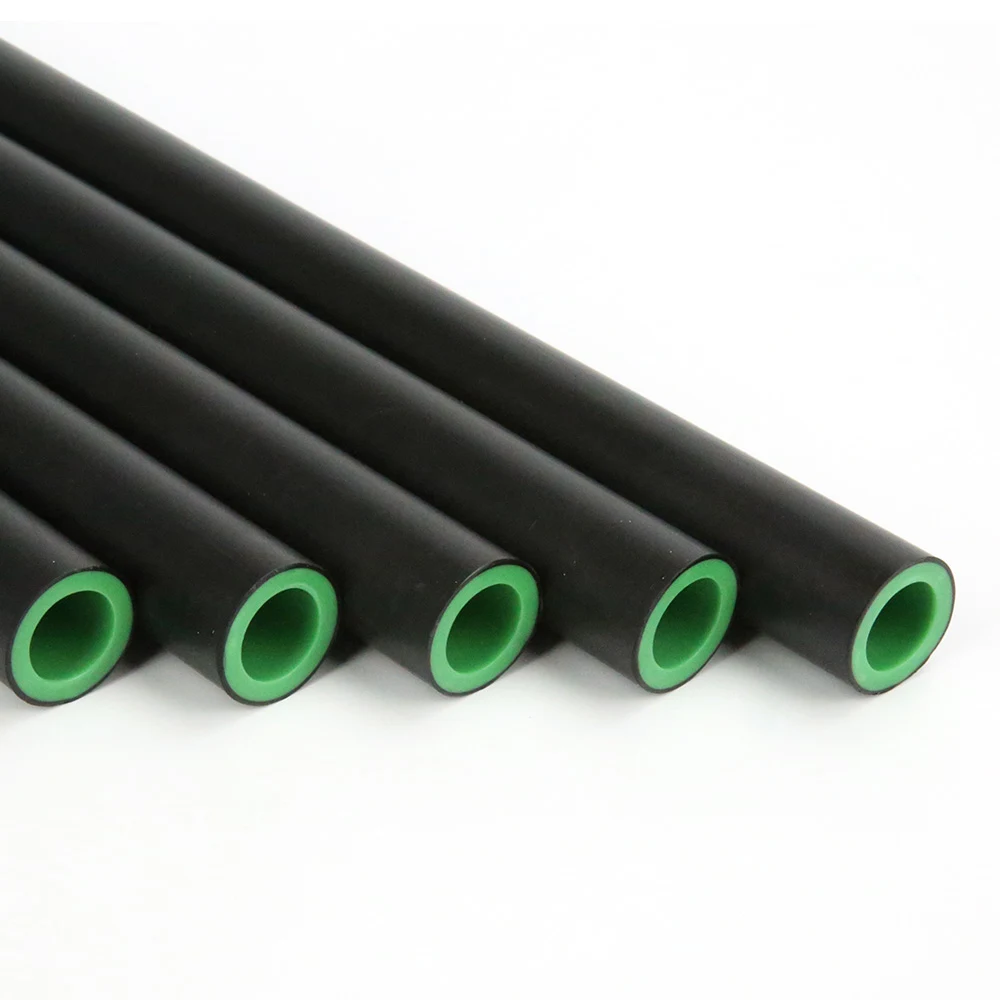
What UV Resistant PPR Solutions Does DESO Offer For Rooftop Applications?
DESO Pipe has specialized in PPR piping systems since 2004, giving it more than 20 years of manufacturing experience. Its products reach over 40 countries.
Production And Materials
DESO operates a 30,000 square meter facility with 200+ automated machines and annual output above 10,000 tons. Pipes use Borealis and Hyosung PP-R raw materials for stable outdoor performance. A 100% on-time delivery record over the past five years supports large OEM and distributor orders.
Quality And Standards
Every batch passes 100% material and product inspection using 50+ testing devices. Production follows DIN8077/8078, ISO 15874-2, ISO 15874-3, and DIN16962. Certifications include ISO 9001, ISO 14001, ISO 45001, CE, WRAS, AENOR, and DVGW.
Engineering And Customization
A dedicated R&D center holds 60+ patents and 500+ molds. OEM and ODM services cover custom colors, logos, and packaging. These systems serve potable water, HVAC, industrial fluid conveyance, and agricultural irrigation.
Explore the full DESO Pipe collection or review the product catalogue to plan your next rooftop project.
Conclusion
Rooftop water lines face sun, heat swings, and pressure changes every day. A UV-resistant PPR Pipe answers all three with sun protection, fused joints, and a wide temperature range. Compared with standard PPR, HDPE, and CPVC, it offers the best mix for exposed hot and cold lines.
Confirm the UV marking, match the pressure rating, and size the pipe correctly. With those steps, your rooftop system stays leak-free for years.


