


No, you cannot reliably glue PPR pipes. PPR achieves a leak-free seal only through heat fusion, where the pipe and fitting melt and bond as one solid piece.
This article explains why adhesives fail on PPR, how the material is correctly joined, and where threaded or flanged transitions fit in. You will also learn the risks of gluing, practical installation tips, and real-world examples from plumbing and HVAC systems.
Can PPR Pipes Be Glued?
PPR stands for Polypropylene Random Copolymer, a thermoplastic built for hot and cold water. Its surface resists chemicals, so glue cannot dissolve and grip it the way it does with other plastics.
Why Gluing Looks Easy But Fails
A glued joint may feel solid at first. Under pressure and heat, that surface contact breaks down quickly. The result is leaks, contamination risk, or full joint failure.
The correct engineering logic is simple. A proper ppr pipe connection comes from molecular fusion, not surface adhesion. Heat creates a single continuous wall across the joint.
Why Do Traditional PVC Adhesives Not Work On PPR Pipes?
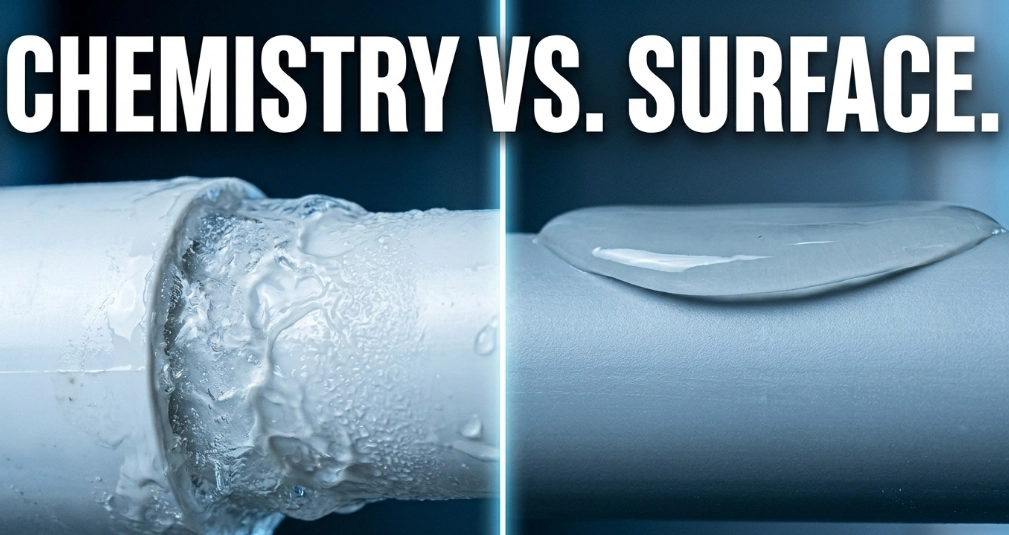
PVC cement works by chemically softening the PVC surface so the two parts melt together. PPR does not react to these solvents, so no real bond forms.
Different Materials, Different Chemistry
PVC adhesive is made for polyvinyl chloride. On PPR, it sits on the surface without dissolving anything. Even strong epoxy cannot match a fused joint.
The Hidden Damage Risk
Using the wrong adhesive can also degrade the PPR surface. That weakens the area you intended to seal. This is one reason ppr pipe glue is not an accepted method in professional installation.
How Are PPR Pipes Actually Joined?

PPR systems rely on heat-based and mechanical methods. The goal is always the same: a joint as strong as the pipe wall itself. Our hot fusion welding guide explains the science in detail.
Socket Fusion
Socket fusion is the standard for small and medium pipes. A fusion tool heats the pipe end and the fitting socket at around 260°C. The parts are pushed together without twisting, then held until cool.
This ppr pipe fusion process forms a homogeneous joint. The polymer chains reconnect across both surfaces. Most residential and commercial branch lines use this method.
Threaded Fittings
Threaded fittings connect PPR to metal components like valves, meters, or pumps. These fittings use embedded brass inserts for strength. They handle the transition where pure fusion is not possible.

Flanged Connections
Flanged connections suit larger diameters and industrial lines. Bolts and gaskets create a removable, pressure-rated seal. They make inspection and maintenance easier on big systems.
| Joining Method | Best Use | Connection Type |
| Socket fusion | Small to medium lines | Permanent, fused |
| Threaded fitting | Metal transitions | Mechanical, removable |
| Flanged connection | Large/industrial lines | Mechanical, removable |
Are There Any Situations Where Adhesives Are Used?
Adhesives are not used to seal PPR-to-PPR joints. The sealing function always comes from fusion, never glue.
Where Sealing Aids Appear
For threaded transitions, installers may use PTFE tape or thread sealant. These help the threads seal, not the pipe body. They support mechanical fittings, not fusion joints.
So if you are learning how to connect PPR pipes, remember the rule. Use fusion for PPR sections and approved fittings for transitions to other materials.
What Are The Risks Of Using Adhesives On PPR Pipe Systems?
Gluing PPR introduces failures that often appear weeks or months later. These hidden defects are costly to repair.
Common Failure Points
- Leaks behind finished walls and ceilings
- Joint separation under thermal expansion
- Water hammer stress on weak bonds
- Possible contamination of potable water
A Residential Case Example
Consider a home hot water line glued instead of fused. It may hold during a quick test. After repeated heating cycles, the joint loosens and leaks inside the wall cavity.
An HVAC and Industrial Case Example
In an HVAC chilled water loop, constant temperature swings stress every joint. A glued connection cannot survive this cycling. Proper PPR pipe welding prevents these failures across long industrial runs.
What Are The Best Practices For Reliable PPR Pipe Installation?
Strong joints start with clean preparation and correct tools. The fusion process should never be rushed.
Prepare And Fuse Correctly
Cut the pipe square and remove burrs. Wipe surfaces clean of dust and moisture. Heat to the right temperature, join without rotation, and hold steady while cooling.
Test Before Turnover
Always pressure test before handover. Trapped air can create false readings, so release it slowly. Our pressure testing guide shows the full step-by-step method
Design For The Whole System
On large projects, plan for thermal movement and pressure zoning. Using matched pipes and fittings keeps every joint fusing within the same range. Our commercial PPR pipe system guide covers this design logic
When welding PPR pipes, consistent material quality matters most. Mixed brands can fuse unevenly and create weak points.
Why Choose DESO PPR Pipe And Fitting Systems For Secure Fusion Connections?
Fusion only works well when pipes, fittings, and tools share the same standard. That is why a complete, single-source system reduces installation risk.
DESO Pipe, a ppr pipe manufacturer, has built piping systems since 2004. The 30,000 m² factory runs 200+ automated machines and 50+ testing devices, with annual output above 10,000 tons.
DESO holds 60+ patents and exports to 40+ countries. Products carry CE, AENOR, DVGW, WRAS, ISO 9001, ISO 14001, and ISO 45001 certifications, backed by a 50-year warranty.
DESO systems serve potable water, HVAC, industrial fluid conveyance, and agricultural irrigation. Hot-melt and electrofusion fittings work together for secure, leak-free joints.
Explore the full DESO product collection and catalog to match the right pipes, fittings, and tools for your project.
Frequently Asked Questions
What Is The Correct Way To Join PPR Pipes?
Heat fusion is the standard method. Socket fusion suits most lines, while threaded or flanged fittings handle transitions to metal or large industrial pipes.
Why Does Heat Fusion Create A Stronger Joint?
Fusion melts the pipe and fitting into one continuous material. The joint becomes as strong as the pipe wall, with no surface gap to fail.
Do PPR Joints Ever Need Sealant?
Only threaded transition fittings may use PTFE tape or thread sealant. PPR-to-PPR fusion joints need no glue or sealant at all.


