


PPR Aluminum composite pipe systems are the better choice for projects that demand low thermal expansion, strong rigidity, and reliable oxygen barrier protection, while fiber composite pipes are preferred for faster installation and lower labor costs. Both pipe types are designed to improve the performance limits of ordinary PPR pipes, but they solve different engineering problems inside modern plumbing and heating systems.
Composite piping combines reinforcing materials with polypropylene random copolymer to improve structural stability under long-term pressure and temperature exposure. Understanding the difference between aluminum-reinforced and fiber-reinforced systems is important because pipe movement, installation efficiency, and long-term reliability directly affect overall project performance.
Unpacking the Materials: What is Aluminum Composite Made Of
The question “What is aluminium composite material?” refers to a multi-layer pipe structure engineered to improve stability and durability compared with standard plastic piping. Instead of relying on a single polymer wall, composite pipes use reinforcement layers that reduce expansion and improve dimensional control during continuous hot water operation.
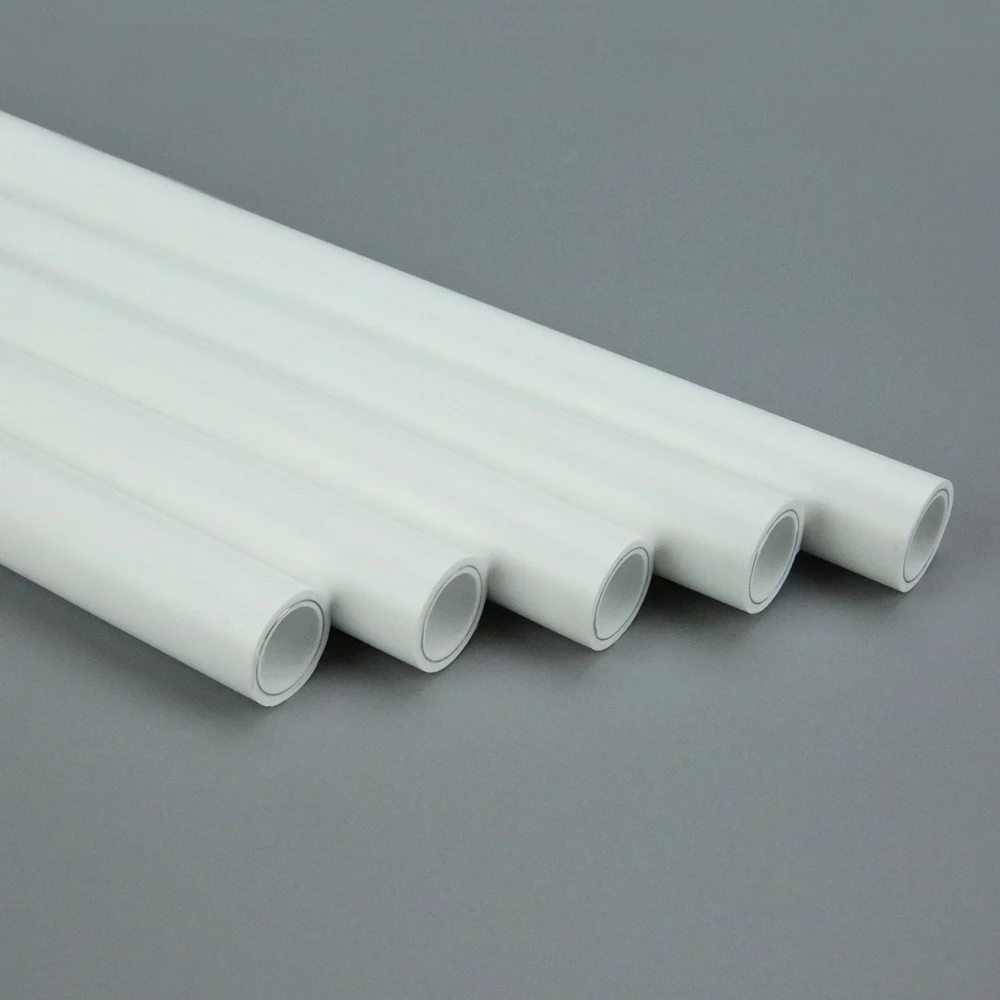
In a typical PPR AL PPR pipe, the aluminum layer is permanently bonded between the inner and outer PPR layers to create a more rigid pipe body. This construction helps maintain pipe alignment under heat while also preventing oxygen from entering the system, which is especially important in closed-loop heating applications.

The 5-Layer Structure
Each layer inside the pipe performs a different technical function:
- Inner PPR layer for clean water transport and corrosion resistance
- Adhesive bonding layer for stable material connection
- Aluminum core for rigidity and oxygen barrier protection
- Secondary adhesive layer for structural stability
- Outer PPR layer for external impact protection
This structure allows the pipe to maintain better shape stability under continuous thermal stress compared with ordinary PPR piping.
Welding Techniques
The aluminum core is commonly manufactured using overlap welding or butt welding methods. Butt welding generally creates a smoother aluminum seam and more uniform wall thickness, which improves consistency in long-term pressure applications.
Layer bonding quality is critical in composite pipe production because weak adhesion can lead to separation under repeated heating and cooling cycles. Advanced co-extrusion production systems such as those used by DESO Pipe, are designed to maintain strong bonding strength between all layers to reduce the risk of delamination during long-term operation.
The Core Functions: What is Aluminum Composite Used For?
The question “What is aluminum composite used for?” is closely related to systems where thermal movement and oxygen penetration must be controlled. Aluminum-reinforced composite pipes are widely used in underfloor heating systems, commercial hot water circulation, HVAC pipelines, boiler connections, and exposed plumbing installations.
Compared with standard thermoplastic pipes, aluminum-reinforced systems expand far less when exposed to hot water. Lower expansion reduces pipe sagging, protects fittings from unnecessary stress, and helps maintain cleaner pipe alignment over long distances. Some industrial environments also require wear protection, PPR aluminum pipe systems for additional external durability, and mechanical protection.
Types of Aluminum Composite Pipe in Modern Plumbing
Modern plumbing systems use different composite pipe structures depending on installation conditions and operating requirements. The most widely used structure remains the aluminum composite pipe system, which combines aluminum reinforcement with PPR material to improve rigidity and thermal stability.
Another common configuration is the aluminum plastic composite pipe, often selected for heating systems and concealed installations because of its strong oxygen barrier performance and dimensional control. Contractors working on high-temperature plumbing projects frequently choose DESO’s PPR aluminum composite pipe systems because they are engineered for stable operation under continuous pressure and elevated temperatures.
What is a PPR Fiber Composite Pipe?
PPR fiber composite pipe uses fiberglass reinforcement instead of aluminum. The fiberglass layer is integrated into the center section of the pipe wall to increase stiffness while still allowing standard PPR heat fusion installation.
One of the biggest advantages of fiber composite piping is installation efficiency. Most DESO PPR fiber composite pipe systems do not require peeling before fusion welding, which reduces preparation time and speeds up installation on large projects. This makes fiber composite pipes highly practical for apartment buildings, schools, hotels, hospitals, and commercial water distribution systems where construction speed matters.
Comparison: Aluminum Composite vs. Fiber Composite
Although both systems improve pipe performance compared with standard PPR pipes, their strengths are different. Aluminum-reinforced pipes are designed for maximum dimensional stability and oxygen protection, while fiber composite systems focus on installation speed and labor efficiency.

| Performance Factor | Aluminum Composite | Fiber Composite |
|---|---|---|
| Thermal Expansion | Extremely low | Moderate |
| Oxygen Barrier | Excellent | Limited |
| Pipe Rigidity | Higher | Moderate |
| Installation Speed | Slower | Faster |
| Fusion Preparation | Usually required | Not required |
| Recommended Use | Heating systems | Water supply networks |
For closed-loop heating systems connected to boilers or metal components, aluminum-reinforced systems generally provide better long-term protection and operational stability. Fiber composite pipes are often more suitable for large commercial plumbing systems where installation efficiency and project speed are major priorities.
How to Choose the Right Pipe for Your Project?
Pipe selection should always match the operating environment instead of focusing only on initial material cost. Projects involving high-temperature circulation, strict expansion control, or oxygen-sensitive equipment usually benefit more from aluminum-reinforced systems.

Fiber composite pipes are commonly selected for large-scale plumbing installations where simplified fusion welding can reduce labor time significantly. According to technical guidance from the Plastics Pipe Institute, proper pipe selection plays a major role in maintaining long-term plumbing reliability, energy efficiency, and stable thermal performance.
The DESO Advantage in Composite Piping Manufacture
The long-term performance of composite piping depends heavily on manufacturing precision and raw material quality. DESO uses premium virgin raw materials together with automated co-extrusion technology to maintain stable bonding between reinforcement layers and PPR material throughout production.
Its manufacturing capabilities include:
- Automated dimensional monitoring
- Stable multi-layer adhesion control
- OEM and ODM customization support
- Laser marking and outer color customization
- International certifications, including CE, WRAS, AENOR, and DVGW
These production standards help ensure composite piping systems maintain stable operation under high-pressure and high-temperature conditions for decades. Properly manufactured systems can provide more than 50 years of reliable service in commercial and residential infrastructure applications.
Conclusion
Choosing the right aluminum composite pipe or fiber composite system depends on installation requirements, operating temperature, and long-term system demands. Aluminum-reinforced pipes provide superior dimensional stability and full oxygen barrier protection, while fiber composite systems offer faster installation and better labor efficiency for large plumbing projects.
Both technologies deliver substantial improvements over ordinary single-layer plastic piping when used in the correct application. In modern plumbing and heating infrastructure, selecting the proper composite pipe directly affects installation quality, operational reliability, and long-term system performance.
FAQs
What is a composite PPR pipe?
A composite PPR pipe combines reinforcement materials with polypropylene to improve rigidity, thermal stability, and long-term durability.
Which pipe has lower thermal expansion?
Aluminum-reinforced composite pipes generally provide lower thermal expansion than fiber composite pipes.
Are fiber composite pipes easier to install?
Yes. Most fiber composite systems do not require peeling before fusion welding, which helps reduce installation time.
Where are aluminum-reinforced composite pipes commonly used?
They are widely used in radiant heating systems, boiler pipelines, HVAC systems, and commercial hot water circulation lines.
Can composite pipes handle long-term hot water pressure?
High-quality certified composite piping systems are engineered for decades of continuous hot water operation under proper pressure conditions.


