


Understanding PPR Fiber Composite Pipes
PPR fiber composite pipe offers a stronger, more heat-resistant solution than standard plastic pipes—ideal for demanding environments and long-term use.
Combining the versatility of polypropylene with the strength of fiberglass reinforcement, this pipe type is fast becoming a preferred choice in infrastructure and residential projects across high-temperature and high-pressure regions.
What is a PPR Fiber Composite Pipe?
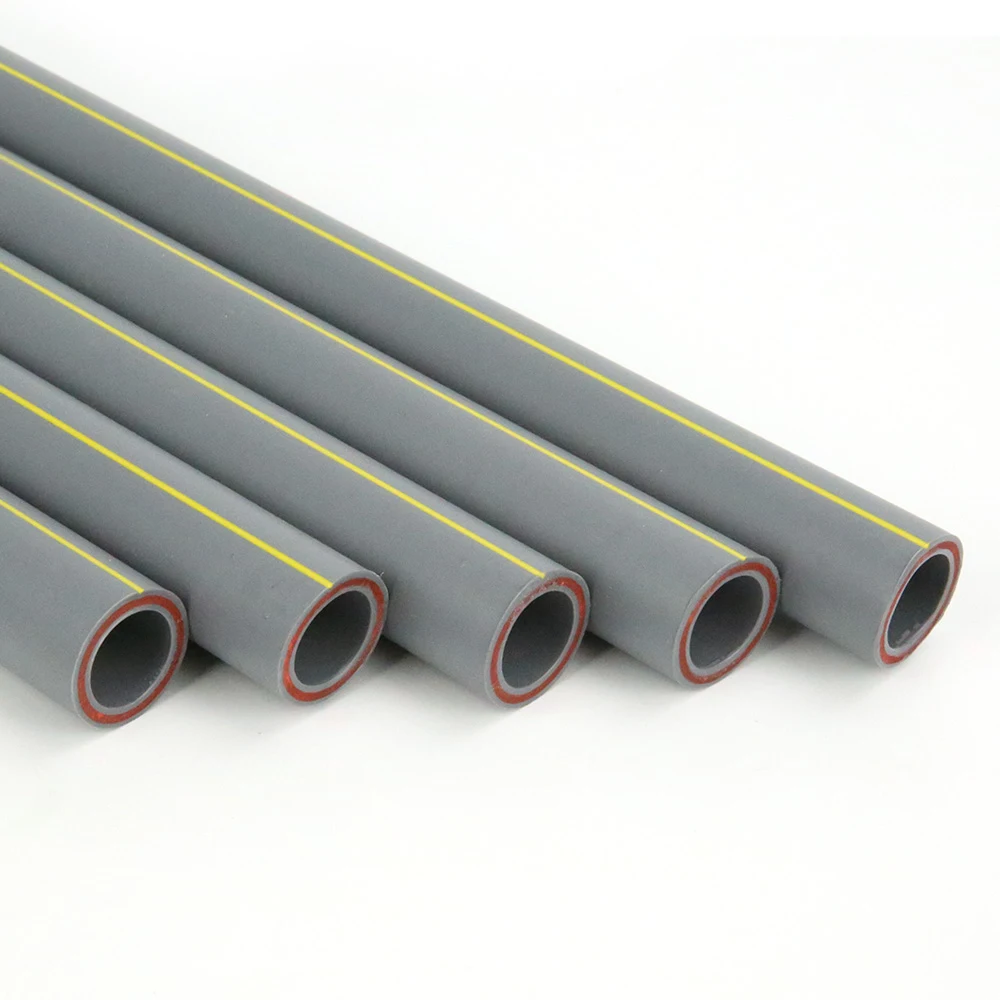
A PPR fiber composite pipe is a multilayer pipe structure made of three key components: an inner layer of polypropylene random copolymer (PPR), a middle fiberglass-reinforced layer, and an outer PPR layer.
This sandwich-like structure is engineered for enhanced rigidity, minimal thermal expansion, and improved temperature resistance.
In simple terms, it delivers all the benefits of standard PPR pipes—but with the added structural performance needed for extreme environments.
How PPR Fiber Composite Pipe is Made
The manufacturing of PPR fiber composite pipes involves a specialized co-extrusion process.
A layer of fiberglass is embedded between two PPR layers during extrusion, forming a pipe that is not only lightweight and corrosion-resistant but also stiff enough to resist sagging and deformation under heat and pressure.
This structure allows the pipe to handle higher temperatures and internal pressures without warping, especially useful for outdoor installations or hot water supply systems in tropical and desert climates.

Why Choose PPR Fiber Composite Pipes?
1. Reduced Thermal Expansion
One of the biggest limitations of conventional plastic pipes is their tendency to expand and deform when exposed to high temperatures.
PPR fiber composite pipes have a much lower coefficient of thermal expansion, meaning they stay dimensionally stable even when carrying hot water.
This is particularly important in places like the Middle East or Southeast Asia, where ambient and fluid temperatures can reach extremes.

2. Greater Structural Strength
The fiberglass layer inside these pipes acts as a reinforcing core, giving the pipe superior mechanical strength.
This helps the pipe maintain its round shape and integrity over long distances, reducing the need for frequent bracket support or compensators.
This quality makes it ideal for:
- High-rise building hot water systems
- Outdoor pipelines exposed to the sun
- Industrial processes involving pressurized fluids

3. Long-Term Durability
PPR fiber composite pipe resists both internal chemical corrosion and external UV degradation, giving it a long lifespan even under tough environmental conditions.
This is especially valuable in South America and coastal regions, where salt, sunlight, and varying humidity can shorten the life of conventional pipe materials.
PPR Fiber Composite Pipe vs. Standard PPR Pipe
| Feature | Standard PPR Pipe | PPR Fiber Composite Pipe |
| Thermal Expansion | High | Significantly Reduced |
| Rigidity / Structural Support | Moderate | High |
| Temperature Resistance | Up to 70°C | 90°C or more |
| Sagging Over Long Distances | Requires frequent support | Minimal sagging |
| Ideal for Outdoor Use | No | Yes |
| Pressure Endurance | Medium | High |
As the table above shows, PPR fiber composite pipe outperforms regular PPR in key areas.
It’s designed to handle demanding conditions that would otherwise weaken or damage ordinary piping systems.
Market Demand: Where and Why?
Across developing and expanding markets, there’s growing pressure to adopt infrastructure that lasts longer, performs better, and supports green standards.
That’s where PPR fiber composite pipe shines. It’s increasingly used in:
- Residential hot water supply networks
- HVAC (heating, ventilation, and air conditioning) systems
- Solar water heating systems
- Agricultural irrigation systems in high-temperature zones
- Industrial water transport and chemical lines
These applications are especially common in hot, high-altitude, or coastal regions, where pipe performance can make or break a system’s reliability.
DESO’s Technical Coordination and OEM Capabilities
While this article focuses on the technical side of PPR fiber composite pipes, it’s worth noting that companies like DESO Group provide technical coordination, mold adaptation, and OEM manufacturing services to help partners introduce or expand their product lines.

This includes not only PPR fiberglass pipe production but also customized support for PPR-CT pipes, electrofusion fittings, and other specialized components.
By offering these services, DESO helps bridge the production gaps for regional manufacturers who may not have the in-house capacity to produce such advanced materials.
Why Global Top 10 PPR Pipe Brands Choose DESO?
| Key Factors | DESO | Others |
|---|---|---|
| International Certifications (ISO, WRAS, CE) | ✅ Full Set | ⚠️ Partial or None |
| Premium Raw Materials | ✅ Borealis & Hyosung | ❌ Recycled / Low-grade |
| Guaranteed Delivery Time | ✅ 100% On-Time in 5 Years | ❌ Uncertain |
| OEM Support: Branding & Packaging | ✅ Color, Logo, Manuals in 7 Days | ❌ Weak or None |
| Technical Match & Mold Flexibility | ✅ 500+ Molds / Custom Options | ❌ Limited Compatibility |
Video:DESO | Full Tests for DESO PPR Pipe & Fittings
Fiberglass-Reinforced Pipes for the Middle East, South America, and Southeast Asia
Markets like the Middle East, South America, and Southeast Asia often present extreme climate challenges, from scorching temperatures to elevated UV exposure.
In these regions, traditional piping materials often degrade quickly or require extensive maintenance.
PPR fiber composite pipe, with its heat resistance and mechanical strength, is a far better fit for these settings.
In fact, many engineering firms and contractors now specify fiberglass-reinforced PPR as the default option for large-scale hot water systems, outdoor pipelines, and even solar energy applications.
Some key benefits in these regions include:
- Lower cost of maintenance due to fewer pipe replacements
- Faster installation due to reduced need for thermal compensation
- Better compatibility with renewable energy systems

PPR Fiber Composite in OEM Partnerships
PPR fiber composite pipe is not just a standalone product—it’s part of a larger ecosystem of plumbing and piping components.
Many manufacturers rely on OEM partnerships to offer these pipes under their own branding.
With OEM support from DESO Group, manufacturers can:
- Quickly test and introduce new pipe models to the market
- Customize size, diameter, and labeling according to regional standards
- Receive support in technical documentation, certification, and mold matching
This approach allows smaller or emerging companies to compete with global brands by offering a comprehensive, high-performance product line without heavy upfront investment in new tooling or R&D.
Where PPR Fiber Composite Stands in the Future of Plumbing
As sustainability and energy efficiency continue to influence construction norms, PPR fiber composite pipes are positioned to play a central role in the future of plumbing and industrial piping.
Their durability and thermal performance support green building standards, reduce energy loss in hot water systems, and help cut down on plastic waste by lasting longer than conventional pipes.
In addition, because they are recyclable and manufactured using non-toxic materials, they align well with international environmental certifications and safety regulations in major export markets.

Final Thoughts: PPR Fiber Composite Pipes
PPR fiber composite pipe combines the flexibility of plastic with the strength of fiberglass, making it an essential solution for modern piping challenges.
Whether you’re planning residential hot water systems, industrial cooling lines, or outdoor networks in extreme environments, this pipe type delivers exceptional value through strength, efficiency, and longevity.
Its expanding role in Middle Eastern, Southeast Asian, and South American markets is a clear sign that fiberglass-reinforced piping is not just a trend—it’s the future of advanced fluid transport systems.
Resources:
Global Composite PPR Pipe Market Research Report 2024
Improving the low-temperature toughness of PPR pipe by compounding with PERT
Experiment on frost heave failure mechanism of PPR water pipe
Experimental Study Regarding the Mechanical Behavior of PPR Pipes


