


Ever noticed how PPR pipes come in different colors on job sites? There’s actually a good reason for that.
Most contractors see green, white, and gray PPR pipes regularly, but you might also encounter blue, yellow, or even black pipes depending on the application.
These color differences serve practical purposes that make installation easier and systems safer.
Let’s break down why PPR pipe colors matter and how to use this information on your next project.

The Truth About PPR Pipe Colors
Many contractors ask us if the different colored pipes have different quality levels. The short answer is no.
Pure PPR material starts out completely clear and colorless before manufacturing.
During production, manufacturers add what’s called a “color masterbatch” to achieve those green, white, or gray finishes you see on job sites.

This masterbatch is essentially a concentrated mixture of colorants and additives that gets blended with the raw PPR material.
The primary reason for adding color is practical: it prevents light penetration that could otherwise promote algae and bacteria growth inside the pipes.
Even those white PPR pipes contain color additives; it’s just that they’re not the natural state of the material.
What Different PPR Pipe Colors Mean
If you’ve ever looked at a commercial plumbing layout and wondered what each color stands for, here’s a quick PPR pipe color chart to help make sense of it all:
| Color | Typical Applications |
| Green | Standard hot and cold water supply lines |
| White | Hot and cold water systems (common in residential) |
| Gray | Hot and cold water systems (popular in commercial buildings) |
| Blue | Cold water systems, often for air conditioning lines |
| Pink | Dedicated drinking water systems |
| Red | Fire suppression systems |
| Black | Outdoor applications (contains UV inhibitors) |
| Yellow | Water transfer (common in some industrial applications) |
Understanding the water pipe color code is important for both initial installation and ongoing maintenance. On large commercial projects, a consistent color code for pipes can help your team identify service lines quickly and avoid costly mistakes.
Keep in mind that different manufacturers may have slight variations, so it’s always best to double-check your supplier’s specifications.
It’s also worth mentioning that black pipes typically contain special UV-resistant additives for outdoor use. This is one case where color does indicate a functional difference.
Why Color-Coding Matters for Safety and Efficiency
The color-coding system provides important safety and health advantages in modern plumbing installations.
Here’s why color-coding matters:
- Prevents Cross-Contamination: Different colors reduce installation errors by making pipe functions visually distinct
- Speeds Up Maintenance: Technicians can quickly identify pipe types without referring to documentation
- Enhances Emergency Response: Critical pipes can be identified faster during urgent situations
- Improves Inspection Processes: Building inspectors can verify correct pipe usage more efficiently
- Reduces Connection Errors: Minimizes risk of accidentally connecting potable and non-potable water systems
- Supports Facility Management: Complex plumbing networks become easier to monitor and maintain
DESO Group: Your Color Customization Partner
At DESO Group, we offer exceptional flexibility in PPR pipe color options to meet your specific project requirements.
Our manufacturing advantage includes:
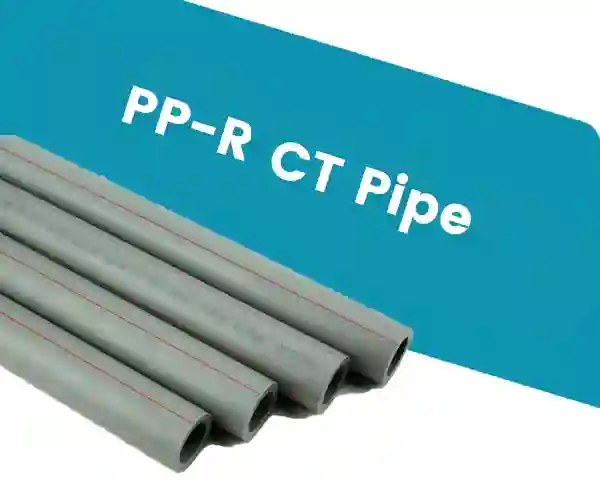
- Extensive Mold Capability: With over 500 sets of molds in our production facility, we can accommodate virtually any pipe specification
- OEM Customization: We specialize in producing custom-colored PPR pipes according to your exact requirements and branding needs
- Proprietary Product Line: Beyond standard colors, we’ve developed our own specialized color-coded product line for various applications
- Premium Raw Materials: We use only high-quality color masterbatches that ensure consistent coloration and optimal performance
- Quality Assurance: All colored pipes undergo rigorous testing to maintain the same mechanical properties regardless of color
Whether you need standard green water supply lines or a completely custom color-coding system for a large commercial development, DESO’s manufacturing expertise ensures you get exactly what your project requires. Contact us today to learn more about how we can support your next plumbing project.


