


Lûleya standard a PPR avê bi domdarî di germahiyên heya dora 70°C de hildigire, bi lûtkeyên kurt nêzî 95°C. Rewşa helîn û nermbûna wê pir bilindtir e, dora 130°C, ji ber vê yekê lûle qet li nêzî wê xalê naxebite.
Ew valahî girîng e. Gelek kiryar germahiya xebatê bi xala helînê re tevlihev dikin û pileya lûleya xelet hilbijêrin. Di vê rêbernameyê de, hûn ê cûdahiyê, ka rêjeya germahiya pileyên lûleya PPR çawa bandorê li zext û temenê dike, kîjan lûle ji bo her serîlêdanê maqûl e, û lûleyên PPR çawa bi rêkûpêk têne girêdan fêr bibin.
Çima nîşanên germahiyê girîng in?
Nîşanên germahiyê diyar dikin ka lûle di bin germ û zexta rastîn de çawa tevdigere. Heke hûn wan paşguh bikin, hûn metirsiya lehî, şûştin, an têkçûna zû dikin. Heke hûn wan rast bikin, pergala wan dehsalan didomîne.
Zext
Kapasîteya zextê bi zêdebûna germahiyê kêm dibe. Lûleyek ku ji bo 20 bar di 20°C de hatî nîşankirin, di 70°C de pir hindiktir digire. Nîşan rêbernameya hilbijartina zexta ewledar in.
Jiyana jiyanê
PPR follows a creep-based aging curve. Lower temperatures mean slower stress damage. Proper design supports a service life of 50 years or more.
Ewlekariya
Overheated pipe softens and deforms. Correct ratings keep joints intact and prevent sudden bursts in occupied buildings.
Germahiya xebatê ya lûleya PPR çi ye?
Working temperature is the heat a pipe handles continuously without losing strength over its design life. For standard PPR, this is commonly up to 70°C, depending on pressure and SDR.
The temperature range of the pipe standard grades covers runs roughly from -10°C to 70°C in continuous use. Short-term peaks near 95°C are tolerated for limited periods. This balance gives PPR pipes high temperature resistance suited to hot water service.
The practical PPR pipe maximum temperature for continuous duty is therefore about 70°C, not the higher peak figures. Designing for the continuous value protects long-term performance.
Xala helîna PPR çi ye?
PPR does not have a single sharp melting point like a metal. Instead, it softens gradually as the heat increases. Engineers use the Vicat softening temperature as a reference, which sits around 130°C for quality raw material.
At this point, the polymer becomes soft enough to deform under load. Short disruptions reaching 100°C can be tolerated without damage. Still, sustained operation near softening would shorten life dramatically.
Di navbera germahiya xebatê û xala helînê de çi cûdahî heye?
Working temperature is a safe, continuous operating limit. The softening or melting region is the physical point where the material loses rigidity. They are not the same, and the gap is intentional.
The table below summarizes the key thresholds for standard PPR.
| Parameter | Typical Value | Nîşe |
| Continuous working temperature | Up to ~70°C | Depends on pressure and SDR |
| Short-term peak | ~95°C | Limited duration only |
| Brief disruption tolerance | ~100°C | Short, occasional spikes |
| Vicat softening temperature | ~130°C | Material begins to deform |
| Socket fusion tool temperature | 260°C ±5°C | For joining, not operation |
Notice the fusion temperature is far above operating limits. Heat fusion melts the surface briefly to bond the pipe and fitting, then the joint cools solid.
Germahî çawa bandorê li nîşanên zextê dike?
Higher temperature lowers allowable pressure. This is called derating. The polymer creeps more under heat, so the safe stress falls.
For example, a PN20 pipe holding 30 bar at 20°C may carry only about 13 bar at 70°C. Designers apply derating factors based on temperature, SDR, and service life. A safety factor of 1.25 to 1.5 is standard under ISO 15874.
This is why a temperature control ppr pipe selection always pairs the operating temperature with the working pressure before choosing a grade.
Kîjan serîlêdan bi her germahiyê re têkildar in?
Matching the pipe to the duty avoids both over-spending and early failure.
Ava Sar
Cold potable and chilled lines run near 20°C. Standard PPR or a thinner SDR grade works well here. A chemical-resistant PPR pipe for water also resists scaling and corrosion in these systems.
Ava Germ
Domaćinski bojleri rade na oko 55°C do 60°C. Viši PN razred podnosi toplinu i pritisak. Mnogi hoteli i bolnice se oslanjaju na ovo za dnevne potrebe.
.Sîstemên Germkirinê
Krugovi grijanja HVAC-a i priključci radijatora doživljavaju stalnu toplinu blizu 70°C s vrhuncima iznad. Ovo zahtijeva PPR cijev otpornu na visoke temperature, često od fiber kompozita ili PP-RCT, za kontrolu širenja.
.Çima PPR-ya pêkhatî ya fîber di pergalên germahiya bilind de çêtir performans dike?
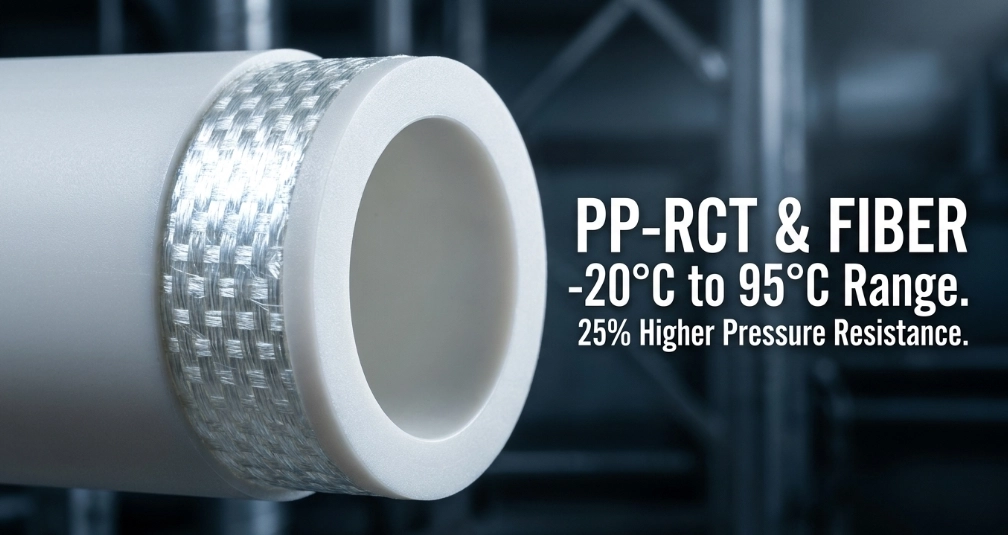
Standardni PPR primjetno se širi kad je vruć. PPR ojačan vlaknima dodaje srednji sloj od staklenih vlakana koji oštro smanjuje toplinsko širenje. Ovo smanjuje progib i naprezanje na dugim dionicama.
.PP-RCT podiže ljestvicu još više. Nudi oko 25% veću otpornost na pritisak i dugotrajnu čvrstoću od prethodnog PP-R, s temperaturnim rasponom od -20°C do 95°C. Bolja otpornost na puzanje dolazi od visokokvalitetnih polimernih sirovina dizajniranih za stalnu toplinu.
.Za uspone u visokim zgradama i industrijske vodovodne linije, to znači uže razmake i stabilniji pritisak.
. دیزاینکردنی سیستەمی بۆری بازرگانی PPR: ڕێنمایی ئەندازیاری کۆتاییobjašnjava kako upravljati ovim toplinskim pomakom.
.Can PPR Pipes Be Glued?
Ne. PPR cijevi se ne spajaju otapajućim ljepilom. Spajaju se toplinskom fuzijom, koja topi i spaja materijal u jedan komad.
.Ovo je česta točka zabune za instalatere koji prelaze s PVC-a. Razumijevanje zašto štiti vaš sustav.
.Why Do Traditional PVC Adhesives Not Work On PPR Pipes?
Otapajuće cementno sredstvo djeluje na PVC jer otapalo otapa površinu i kemijski je zavaruje. Polipropilen odolijeva tim otapalima, tako da kemija nikada ne veže.
.Ista kemijska otpornost koja čini PPR cijev otpornu na kemikalije za vodu tako izdržljivom također blokira lijepljenje ljepilom. Ljepilo se može činiti da se lijepi, ali ne nudi stvarnu čvrstoću pod pritiskom.
.How Are PPR Pipes Actually Joined?
PPR se oslanja na metode toplinskog spajanja koje stvaraju homogeni spoj. Tri metode pokrivaju većinu projekata.
.Socket Fusion
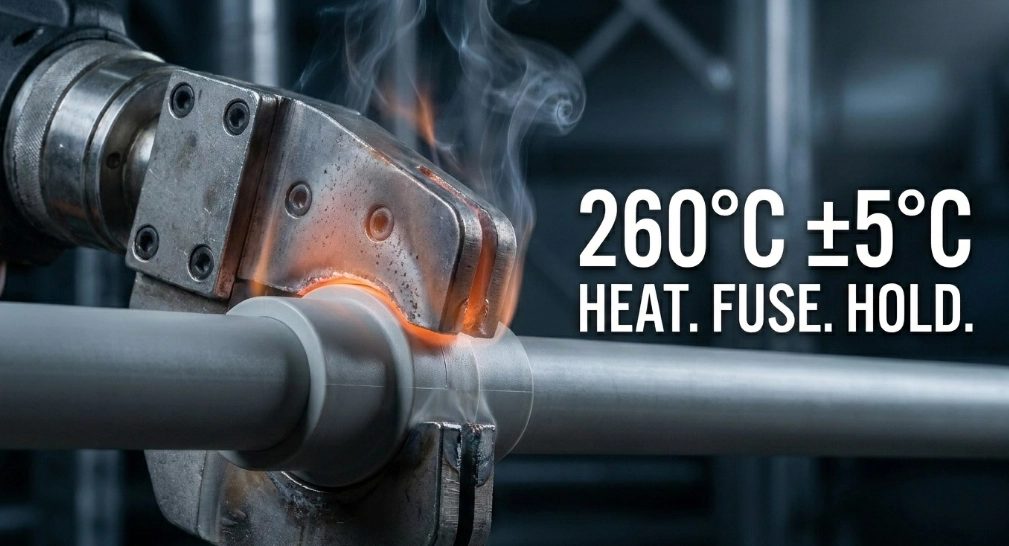
Alat za grijanje zagrijava kraj cijevi i utičnicu fitinga na 260°C ±5°C. Dijelovi se guraju zajedno i drže kratko. Vrijeme grijanja skalira se s veličinom: oko 5 sekundi za 20 mm, 7 sekundi za 25 mm i 8 sekundi za 32 mm.
.
DS-63 PPR aparat za zavarivanje utičnica
Precizna kontrola temperature od 260°C ±5°C za fuziju utičnica, podržava veličine cijevi od 20 mm do 63 mm, osigurava dosljedno homogeno spajanje.
.Threaded Fittings
Navojni fitingi s mesinganom umetkom spajaju PPR s metalnim cijevima, ventilima ili armaturama. Omogućuju sigurne prijelaze bez fuzije.
.Flanged Connections
Prirubnice su pogodne za velike promjere i spojeve opreme. Omogućuju rastavljanje za održavanje na većim linijama.
.Are There Any Situations Where Adhesives Are Used?
Rarely, and never for structural pressure joints. Adhesives may appear in temporary marking or external sealing of unrelated components. They are not part of forming a load-bearing PPR connection.
What Are The Risks Of Using Adhesives On PPR Pipe Systems?
Using glue on PPR creates hidden weak points. Risks include:
- Joint failure under pressure or temperature swings
- Slow leaks behind finished walls
- No real chemical bond, despite surface appearance
- Voided performance expectations and rework costs
Fusion remains the only sound joining method for pressure service.
Ji bo sazkirina lûleya PPR-ê çêtirîn pratîk çi ne?
Good practice protects both the joint and the long-term system. Follow these steps.
- Cut the pipe square and remove burrs before fusion.
- Keep fusion surfaces clean, dry, and oil-free.
- Hold the correct heating time for each pipe size.
- Below 5°C, increase heating time to prevent cold fusion defects.
- Never twist or realign joints after fusing.
- Allow full cooling before pressurizing.
Selecting the right branch fittings also helps flow. The Y-Type Tee یان Equal Tee یان 5-Way Tee: کام دانەی PPR بۆ لقی ئاڵۆز؟ guide compares options for complex layouts.
Xelasî
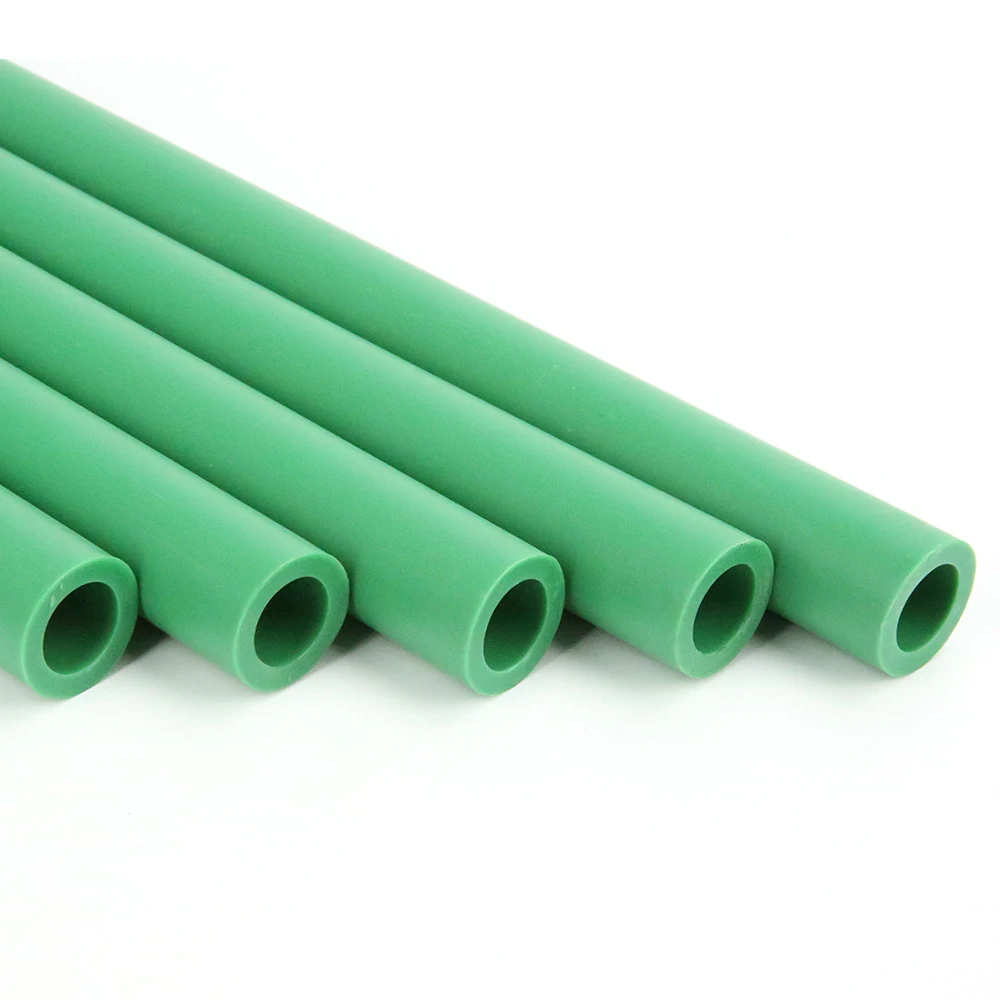
Heke paip û pêkhateyên wê heman standarda madeya xav parve dikin, yekbûn yekbûnek yekgirtî çêdike. Wekî Hilberînerê lûleya PPR bi 20+ sal ezmûn, DESO Pipe pergalên PPR yên li hev kirî ji bo girêdanên stabîl hilberîne.
DESO 200+ makîneyên otomatîk û 50+ amûrên ceribandinê dimeşîne, 60+ patentên xwe digire, û hinarde dike 40+ welatan. Berhem hilgirin CE, WRAS, AENOR, DVGW, û sertîfîkayên ISO 9001, 14001, û 45001, bi lihevkirina bi ISO 15874 û DIN 8077/8078/16962.
Rêze avê vexwarinê, HVAC, veguhastina şilavên pîşesaziyê, û avdana çandiniyê piştgirî dike. Berhevoka tevahî keşf bikin û dakêşin Kataloga Berhemê da ku pileya rast ji bo projeya xwe bibînin.


