


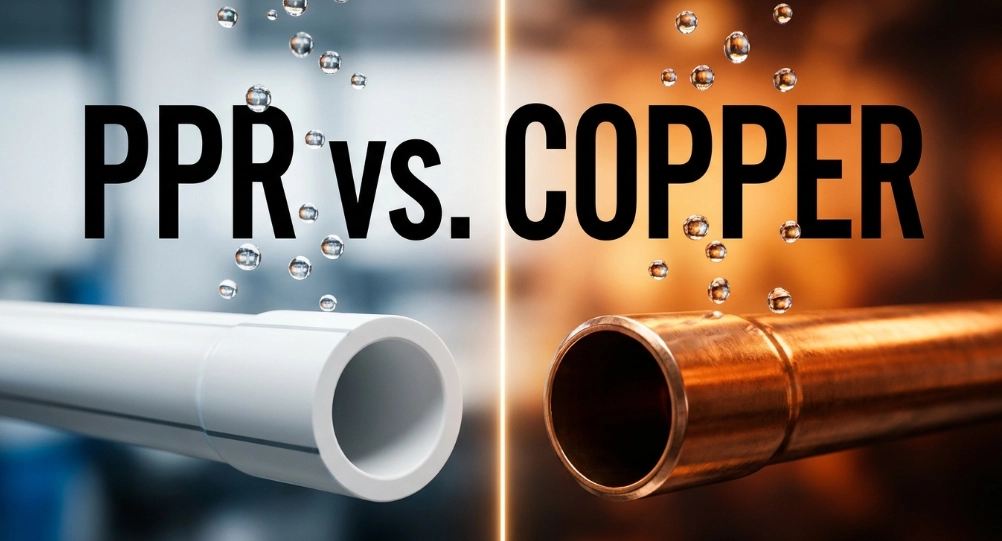
Al comparar tuberías PPR vs. cobre para la mayoría de los sistemas de agua modernos, el PPR reduce costos y se instala más rápido mientras resiste la corrosión. El cobre aún gana en casos de calor extremo y antimicrobianos.
Este artículo desglosa las diferencias en términos sencillos. Aprenderá cómo cada material maneja el costo, la vida útil y la instalación. También cubrimos qué tubería se adapta a proyectos específicos, para que ingenieros, contratistas y compradores puedan decidir con confianza.
¿Qué Son las Tuberías PPR y las Tuberías de Cobre?

Ambos materiales transportan agua y fluidos, pero se comportan de manera muy diferente en sistemas reales.
Cómo Funcionan las Tuberías PPR
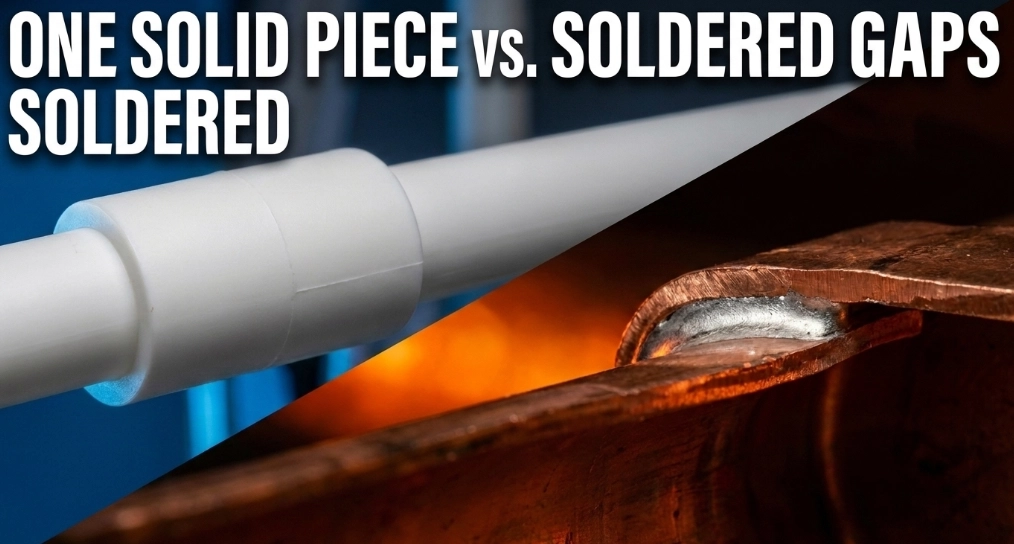
PPR significa copolímero aleatorio de polipropileno, un plástico diseñado para fontanería. Se une mediante fusión térmica, que funde la tubería y el accesorio en una sola pieza sólida. El PPR resiste la corrosión, la incrustación y la mayoría de los productos químicos. Es adecuado para agua caliente y fría, riego y líneas de fluidos industriales.
Cómo Funcionan las Tuberías de Cobre
El cobre es una tubería metálica utilizada durante décadas en hogares y sistemas HVAC. Se une mediante soldadura fuerte o blanda, lo que requiere llama y mano de obra calificada. El cobre transfiere bien el calor y limita naturalmente las bacterias. Sin embargo, el agua ácida puede corroerlo con el tiempo.
¿Cómo se Comparan las Tuberías PPR y de Cobre de un Vistazo?
La siguiente tabla resume las diferencias técnicas y prácticas fundamentales.
| Factor | Tubos PPR | Tubo de cobre |
| Material | Copolímero aleatorio de polipropileno | Metal |
| Resistencia a la corrosión | No se oxida ni se incrusta | Puede corroerse en agua ácida |
| Conductividad térmica | Baja (menor pérdida de calor) | Alto |
| Método de unión | Fusión térmica | Soldadura / soldadura fuerte |
| Peso | Ligero | Pesado y rígido |
| Vida útil | más de 50 años | Varias décadas en agua ideal |
| Costo del material | Más bajo | Más alto y volátil en precio |
| Mejor ajuste | Suministro de agua, industrial, riego | HVAC, refrigeración, recorridos expuestos |
Esta instantánea ayuda a una comparación rápida de tuberías de agua caliente antes de un análisis más profundo.
¿Qué Tubería Cuesta Menos Durante el Ciclo de Vida Completo?
Cost is rarely just the purchase price. Smart buyers weigh material, labor, and long-term maintenance together.
Costo del Material
PPR uses lower-cost raw inputs, so pricing stays steadier. Copper tracks global metal markets, which shift weekly. For large tenders, that volatility makes copper budgets harder to lock. This is a key reason PPR appears as a copper pipe alternative in bid documents.
Costo de Mano de Obra
PPR heat fusion is quick and needs only basic training. A crew can finish many joints in minutes. Copper soldering requires flame, flux, cleaning, and certified skill. That extra time and expertise raises labor cost on every connection.
Costo de Mantenimiento
PPR resists scaling and corrosion, so repair calls drop. Copper in poor water conditions can develop pinhole leaks within years. Across a full system lifecycle, many projects report 30 to 50 percent savings with PPR.
Bottom line: PPR usually delivers lower total cost in ppr pipe vs copper plumbing decisions.
¿Cuánto Dura Cada Tubería?
Both pipes are durable, but their lifespan depends on different conditions.
Longevidad de las Tuberías PPR
PPR pipes commonly last 50 years or more at standard operating temperatures. Because PPR is a polymer, it does not react with water, oxygen, or minerals. Its performance stays predictable across varied water chemistry.
Longevidad de las Tuberías de Cobre
Copper can last for decades in clean, balanced water. In low-pH or aggressive water, though, it degrades faster. So copper longevity is strong but condition-dependent.
¿En Qué Difiere la Instalación Entre PPR y Cobre?
Installation speed directly affects project timelines and labor budgets.
Unión y Herramientas
PPR needs a heat fusion welder and a few collars or sockets. Copper needs a torch, solder, and flux. The PPR process is faster and carries lower fire risk on site.
Resistencia de la Unión y Seguridad en el Sitio
Heat fusion fuses pipe and fitting into one continuous body, reducing leak points. Copper joints rely on perfect solder flow. Any flaw can become a future leak. For an adjacent material angle, see this comparison of PPR versus stainless steel pipe.

¿Qué tubería funciona mejor en diferentes aplicaciones?
Material choice should match the operating environment, not habit. Here is how each performs across common project types.
Reforma de agua caliente residencial
A homeowner replacing old corroded lines benefits from PPR. Its low thermal conductivity reduces heat loss, and lightweight pipe speeds the retrofit. This makes the copper vs plastic pipe choice clear for budget-focused renovations.
Fontanería de hoteles y apartamentos
Large builds need fast, consistent installs across many floors. PPR fusion lets crews standardize joints and keep schedules tight. Stable pricing also helps contractors win competitive tenders.
Líneas de fluidos industriales
For chemical or food-processing systems, PPR resists corrosion and many aggressive fluids. Proper fittings, like a well-engineered PPR cross fitting, keep flow stable under pressure.
Casos de alta temperatura y HVAC
Copper still leads where very high heat transfer matters, such as refrigeration. For extreme exposed runs, its strength and heat handling remain useful.
¿Por qué más proyectos están cambiando del cobre al PPR?
Three factors drive the shift: cost stability, faster installation, and corrosion-free service.
Copper theft from job sites adds another concern, since scrap value attracts theft. PPR carries no such resale risk. Buyers managing scale and tight schedules increasingly favor PPR for predictable outcomes.
Manufacturing rigor also matters here. PPR made from premium raw materials, with documented testing, behaves consistently in the field. That consistency reduces failures during transport, installation, and long-term use.
Conclusión
When weighing ppr vs copper pipes, PPR is the ideal choice for most water supply and industrial projects where cost, speed, and corrosion resistance are priorities. Copper is better suited for specialized high-heat or refrigeration applications.
Tubería DESO has specialized in PPR piping systems since 2004. As a PPR pipe manufacturer, we export to over 40 countries, using premium raw materials from Borealis and Hyosung. Our facility produces over 10,000 tons annually, and we support large-volume OEM and ODM orders with extensive customization options. All products meet international standards, including ISO 9001, CE, and WRAS.
Ready to plan your next project? Explore the DESO product collection and download our catalogue to find the right pipe for your needs.
Preguntas frecuentes
¿Funciona la tubería PPR para agua caliente?
Sí. El PPR maneja agua caliente y fría y resiste bien el calor. Su baja conductividad térmica también reduce la pérdida de calor, lo que mejora la eficiencia energética en las líneas de agua caliente.
¿Cuánto duran las tuberías PPR?
En condiciones estándar, las tuberías de PPR duran 50 años o más. Debido a que no se corroen ni forman incrustaciones, su vida útil se mantiene predecible en diferentes químicas del agua.
¿Es la instalación de PPR más rápida que la de cobre?
Sí. El PPR utiliza termofusión, completando uniones en minutos con capacitación básica. El cobre necesita soldadura, llama y mano de obra calificada, lo que ralentiza la instalación.


