


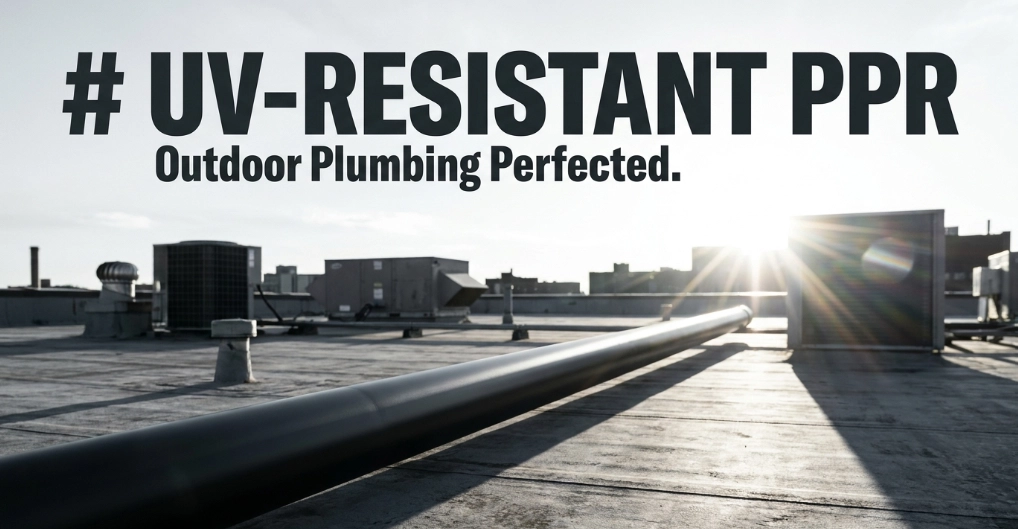
For outdoor plumbing, the UV-resistant PPR Pipe is the better choice. Standard PPR pipe degrades in direct sunlight. It turns brittle, discolors, and loses strength over time. UV-grade pipe uses stabilizers and coatings that block UV radiation. This protects the pipe and extends its service life outdoors.
This guide explains how UV radiation damages PPR pipes. It compares both pipe types on key technical factors. It also shows which outdoor applications need UV-grade pipe.
Can Standard PPR Pipe Be Used Outdoors?
You can install standard PPR pipe outdoors. But it is not designed for that job.
Standard PPR pipe is made for indoor plumbing. It is a common PPR pipe for hot water and cold water inside buildings, where sunlight rarely reaches it. Once it sits in direct sun, its performance drops. The timeline depends on climate and UV intensity, but the decline is steady.
In tropical regions, UV radiation stays strong all year. Unprotected pipes can show surface cracks and fading within a few years. This is a common cause of early failure in irrigation lines, rooftop runs, and outdoor water supply.
How Does UV Radiation Damage PPR Pipes?
UV Degradation
Polypropylene absorbs UV radiation between 290 and 400 nm. These rays excite the molecular bonds at the surface. This starts photo-oxidation, which breaks down the polymer structure.
A study in Polymer Degradation and Stability (Diepens & Gijsman, 2009) found polypropylene is highly prone to UV photo-oxidation. Damage stays near the surface—about 0.025 to 0.076 mm deep. But that is enough to change the pipe’s mechanical properties.
Brittleness
As the polymer chains break, the material grows rigid and brittle. The pipe loses impact resistance. A pipe that once flexed under stress will crack under loads it used to handle. This matters outdoors, where pipes face thermal cycling and physical contact.
Cracking
Cracking follows brittleness. Micro-cracks form on the outer layer, then spread under pressure or temperature change. In outdoor hot water pipe runs, like solar loops, heat and UV speed this up.
What Is UV Resistant PPR Pipe?
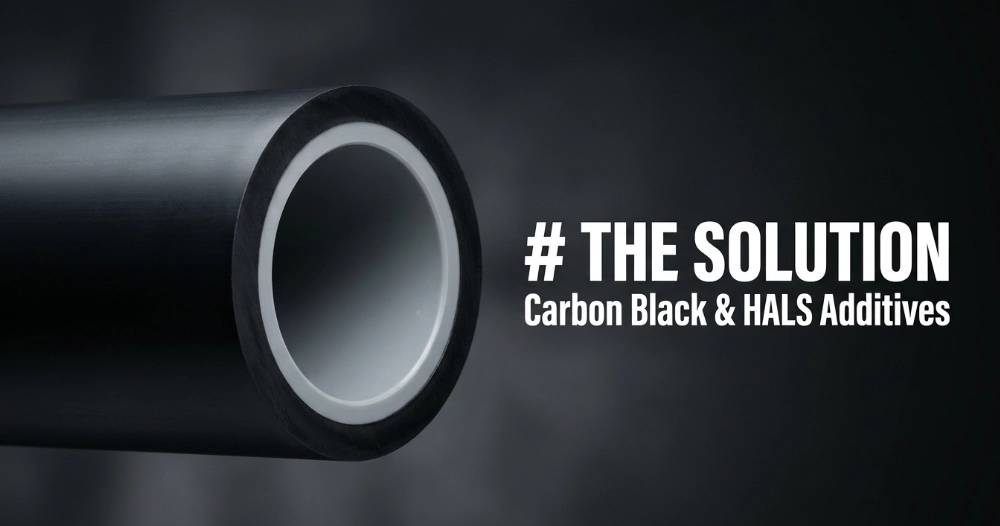
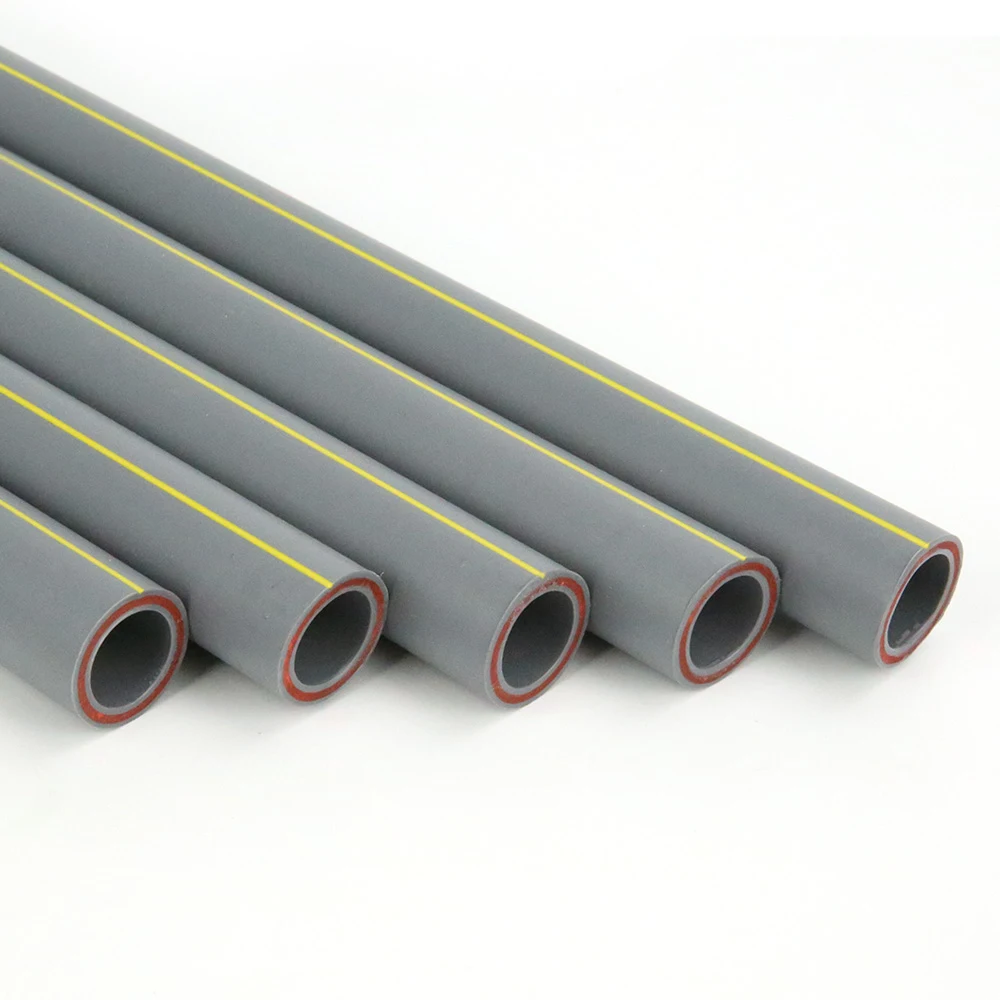
This is standard PPR pipe made with UV stabilizer additives and, often, protective coatings. Among the PPR pipe types built for outdoor duty, common options include:
Carbon Black and HALS
Carbon black absorbs UV before it reaches the polymer chains. It works well but limits color to dark shades. HALS (Hindered Amine Light Stabilizers) interrupt the photo-oxidation reaction and allow more color options.
Protective Outer Coatings
Some makers co-extrude a stabilized outer layer over a standard PPR core. This shields the structural material without changing its base properties.
These additives do not change how the pipe works. It carries the same flow at the same pressure and temperature ratings. It simply lasts far longer in the sun. One of the key PPR pipe advantages here is that UV grades keep the material’s core strengths while adding sun protection. For regional context, see how anti-UV polypropylene pipes are rising in tropical climates.
How Do UV Resistant and Standard PPR Compare?
| Factor | Standard PPR Pipe | UV-Grade PPR Pipe |
| UV Stabilizers | None or minimal | Carbon black, HALS, or coating |
| Outdoor Suitability | Not recommended | Built for direct sun |
| PPR Pipe Temperature Rating | Up to 95°C | Up to 95°C |
| PPR Pipe Pressure Rating | PN10 to PN25 | PN10 to PN25 |
| PPR Pipe Lifespan (Outdoor) | Greatly reduced | 50+ years, installed correctly |
| PPR Pipe Cost | Lower upfront | 10–20% higher; lower long-term |
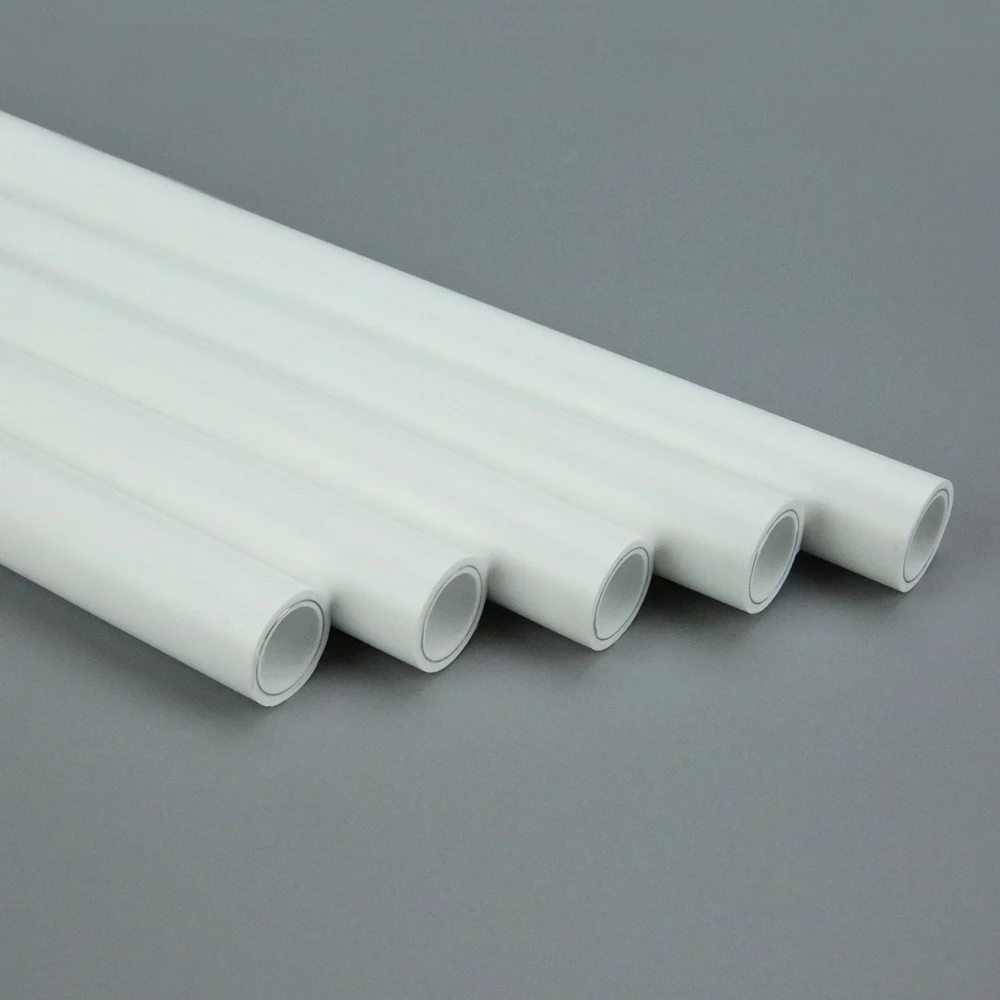
| Color Options | White, green, gray | Darker shades common |
What Are the Best Outdoor Applications?
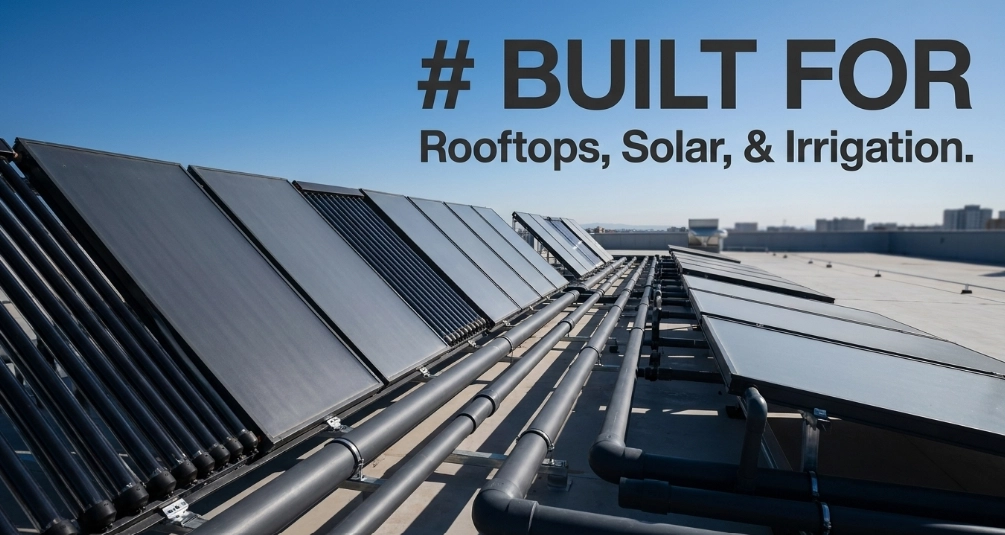
Rooftop Plumbing and Water Supply
Rooftop lines face constant sun, high heat, and thermal cycling. Standard PPR fails fast here, so UV-grade pipe is the correct choice. Above-ground water supply lines need the same protection. Buried lines are shielded by soil.
Irrigation and Solar Water Heating
Irrigation systems often run across open ground in full sun. UV-grade pipe resists both sunlight and fertilizer chemicals. Solar water heating is the toughest case. The pipe handles direct UV and fluid near 90°C at once. Using standard PPR here is a specification error. This PPR cold vs. hot water pipe comparison explains why the right hot water pipe material matters and why UV-grade PPR is the best PPR pipe for these sun-exposed loops.
What Are the Common Mistakes in Outdoor Pipe Selection?
Skipping UV Protection or Relying on Paint
The most frequent error is using standard PPR outdoors, assuming all grades perform alike. They do not. Latex paint can slow UV exposure, but it wears and chips. It is no substitute for stabilized pipe.
Ignoring Expansion and Certification
Outdoor runs face wide temperature swings. Poorly spaced supports and expansion joints can stress even UV-grade pipe. Also verify certification. A pipe labeled “UV resistant” without proof to ISO 15874 offers no real guarantee.
When Is UV-Grade PPR Worth the Extra Cost?
The premium runs about 10–20%. It pays off when:
- More than 20% of the run sits in direct sun
- The site is a high-UV climate
- The system carries hot water outdoors
- Service life must exceed 20 years
- Replacement access is hard or costly
For fully indoor systems, standard PPR stays the cost-effective pick, since the added PPR pipe cost buys UV protection you do not need indoors.
Why Do Many Contractors Choose UV-Grade PPR?
On large commercial and agricultural jobs, many contractors specify UV-grade pipe for outdoor runs by default. The wrong pipe type creates warranty liability, callbacks, and reputation risk. The small cost gap is minor next to early failure and replacement.
Client expectations also drive this. Projects in tropical and subtropical countries now list UV-grade pipe in tender documents, especially for water distribution and irrigation. Contractors who cannot supply it lose the bid.
Why Are DESO Pipes Designed for Outdoor Use?
Standard PPR is a strong material for indoor use. Outdoors, UV radiation will break it down. The UV-grade version shares the same ratings, installs the same way, and fits the same fittings. It simply survives sunlight.
If your project has any sun-exposed runs, UV-grade pipe is not an upgrade. It is the correct specification.
DESO Pipe has produced PPR piping systems since 2004. That is over 20 years of experience, a 30,000 m² facility, and 200+ automated machines. Output tops 10,000 tons a year, with exports to 40+ countries, including high-UV tropical markets.
DESO uses Borealis and Hyosung PP-R raw materials for stable polymer performance and a long PPR pipe lifespan. The line is certified under AENOR, DVGW, WRAS, CE, and ISO standards, and backed by 60+ patents from a dedicated R&D center.
For OEM buyers, DESO supports custom colors, logos, and packaging across 500+ molds, with 100% on-time delivery over the past five years. Explore the full range in the DESO product catalogue and request a quote for your next outdoor project.
Frequently Asked Questions
Can UV-grade PPR pipe be used for both hot and cold water outdoors?
Yes. It handles the same range as standard PPR—up to 95°C hot and down to -20°C cold. The stabilizers do not affect thermal performance. It suits outdoor hot water pipe uses like solar heating and cold supply lines alike.
What is the PPR pipe lifespan outdoors without UV protection?
Standard PPR in direct sun can crack, fade, and weaken within a few years. In tropical regions, damage may appear in three to five years. UV-grade pipe, installed well, is built to last 50+ years.
Does UV-grade PPR cost much more than standard PPR?
The premium is typically 10–20%. On most projects, lower maintenance and fewer replacements offset that upfront gap, especially in high-UV outdoor sites.


